What you carry is not only in the bag. It’s also in your head.
However lightly you pack, if you’re moving around for more than a week, you will probably discover you brought too much. People give things away as they go. That’s normal. Do yourself a favor and start closer to the bone. A good rule of thumb is to take half of what you think you’ll need.
I aim for one carry-on and one personal item, so I’m not standing at a bag drop or paying for the privilege. Airlines change their size and weight rules often enough that I check them before I fly, especially when a trip hops from one region to another. What you can carry on in one place, you may have to check in another.
By the end of that long trip I had boiled the kit down to a medium backpack, a small carry-on, and a melodica I couldn’t quite give up. The rest was simple: a couple of sink-washable shirts, a pair of trousers that turned into shorts, a thin sleeping bag, a camp towel, earplugs, copies of the passport, cards from more than one bank, and a little spare cash split into more than one hiding place. I bought what I later needed, and only then. I also let go of what started to weigh me down.
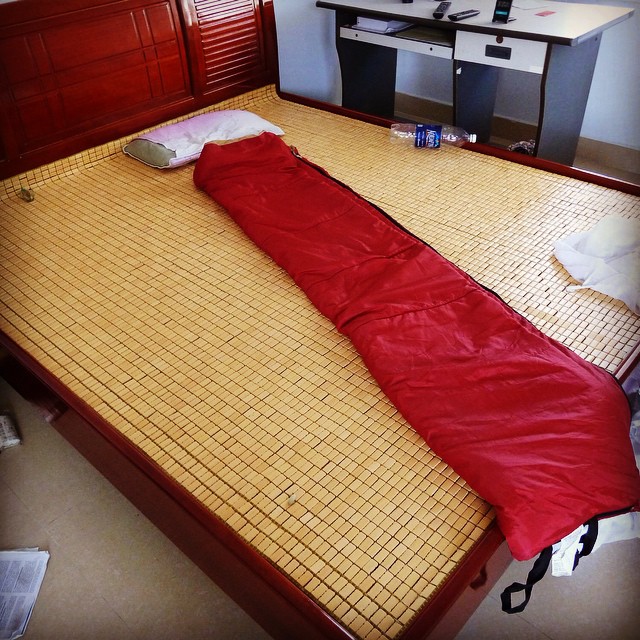
The sleeping bag in this photograph spent the night on a bamboo bed in Vietnam, in a room I was borrowing. It took up almost no space, and it made an unfamiliar bed feel like mine. That’s the kind of object worth carrying: something you use often, in many places, that earns the weight.
Write your number on the bag so a kind stranger can reach you if it goes missing, and skip putting your home address on the outside. Keep a copy of your passport and card numbers somewhere you can reach if the physical ones disappear, and don’t keep all of the cash in one pocket. I learned the hard way not to leave money in a bag under a bus.
The deeper lesson shows up after a few weeks on the move. Your sense of what you own changes when you have to carry it. You’d be surprised how quickly you adjust to less, and how much you may be ready to part with when you get home. Long travel makes you look at possessions differently. Often you have to live that lightly for a while before you can see it.