Looking back, the first Bonnaroo felt less like a concert weekend than the birth of a summer ritual. In June 2002, a Tennessee field off Interstate 24 filled with people who were almost giddy to be inventing it together. That contagious excitement would, in hindsight, launch a decade of summer jam-band festivals. I went back the next year for a deeper lineup and already found the magic thinner. The music was still there. The bounce was not quite the same.
Year One: June 2002
We hit the Manchester exit around 11:30 on a Thursday morning and sat in traffic for two and a half hours before landing at Camp Drummond, not far from the stages. Almost everyone seemed to have arrived as a clan, a crew, a ready-made circle. I had come with one other person, and on that first day our neighbors barely looked up.
The next morning was the first day of summer, and the Tennessee sun was already searing. What changed the weekend was not a set list so much as the moment strangers stopped being scenery. Standing near the front of a late-night tent, I started talking with Robbie, his sister, and their friend Nate—Californians who, unlike the closed circle at our campsite, were happy to take in whoever wandered over. Their tents turned out to be twenty yards from mine. After that, the festival had a neighborhood.
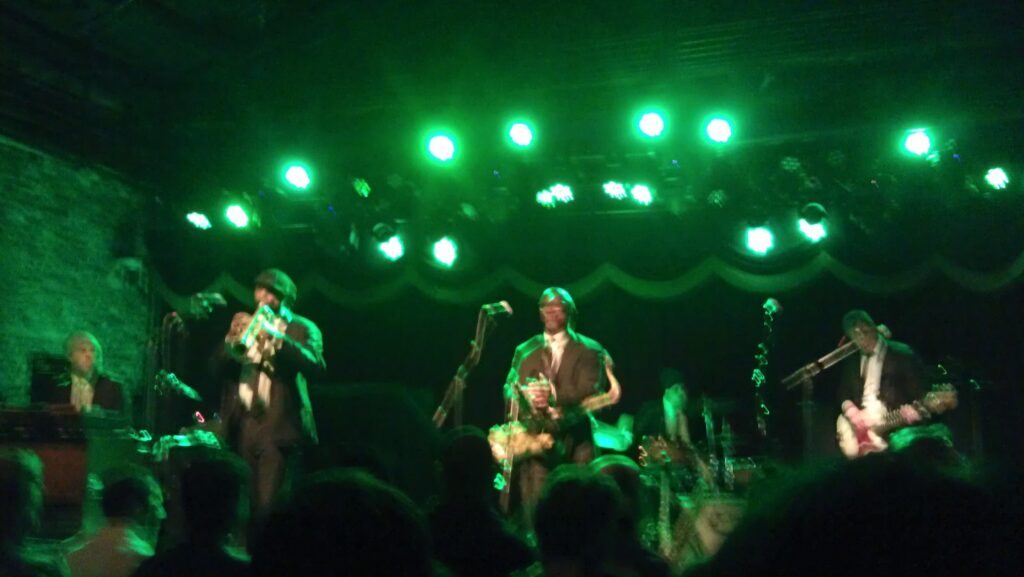
Inside the shows, people were as open as the camps often were not. You could feel it in the way a crowd leaned into a groove together. Les Claypool called it “feeling the bounce,” and that first year it was constant: musicians feeding off a field that was discovering itself in real time, and a field feeding off musicians who seemed just as surprised to be there.
The high-water mark, for me, came late on Saturday. Around 12:30 a parade float rolled past the tent, a snare drum leading a second-line of cheering, and suddenly the stage was packed, beads in the air, everyone in the room clearly having a blast. Guests kept walking on as if the party had simply grown another room. I got back to the tent at sunrise, slept a little, and spent Sunday on a tarp with people I had not known on Thursday. We packed up before the last set was over and reached a hotel north of Nashville by one in the morning, for a shower and air-conditioning. It had been one of the longest weekends of my life, and one of the greatest.
Year Two: June 2003
A year later we were back on the I-24 ramp at 8:15 in the morning. It took six and a half hours to creep into Camp Daniel Boone, out by the treeline, with a patch of poison ivy beside the tent. One driver I talked to had been sitting even longer—eight and a half hours. We went from being the poor saps in the car to more nameless faces in the mob.
The camps were friendlier this time. Dave and Corkey from Michigan, Dylan and Laura next door, Patrick and Aaron behind us, a solo traveler from New York named Jeff in the line into Centeroo: people opened up within the first day. Once the music started, the friendliness inside the shows was the same as the year before. What had changed was harder to name and easier to feel.
Spring rains had left the ground in a strange condition: a dry crust four or five inches thick over a river of mud, so every step gave and sprang back. The staff were so busy fighting that mud that some of the little things that had made the original weekend special slipped. I heard “Don’t wait—hydrate!” only once. The year before, the place had made a point of greenness; this year trash and recycling were mixed together by Sunday, and people had excuses. The field still held some eighty thousand people, but the care that had been part of the first year’s pride was already harder to find.
The lineup, if anything, looked even better. Jack Johnson welcomed the crowd to “the greatest music festival in the world,” and for a moment it was easy to believe him. Ben Harper talked about roots music and the people in that field keeping it alive. From camp you could hear Neil Young shout “bonna-ROOOO!” and the tents cheered back. There were still nights when a room went completely still and then erupted together, and still afternoons of claiming a corner of someone else’s tarp, sharing a spray bottle in the heat, and knowing within a few minutes that the strangers who had just sat down were good people.
And yet the electricity of 2002 was higher, without question. Nobody coming back really expected it to be the same. The newness—of the place, of the idea, of musicians and fans inventing the weekend at the same time—had given the first year another dimension, and that dimension was already gone. The bounce was the clearest measure. The year before, it had been constant. In 2003, whether it was the bands or the fans, a lot of people seemed too self-conscious to give themselves over to it.
On the drive north up I-71 through Columbus I knew the weekend had still been worth it. I also was not sure I would ever return. Looking back now, that first June feels like the spark that set off a decade of summer jam-band festivals. By the second year the lineup was deeper and the camps were kinder, and the magic had already begun to thin.