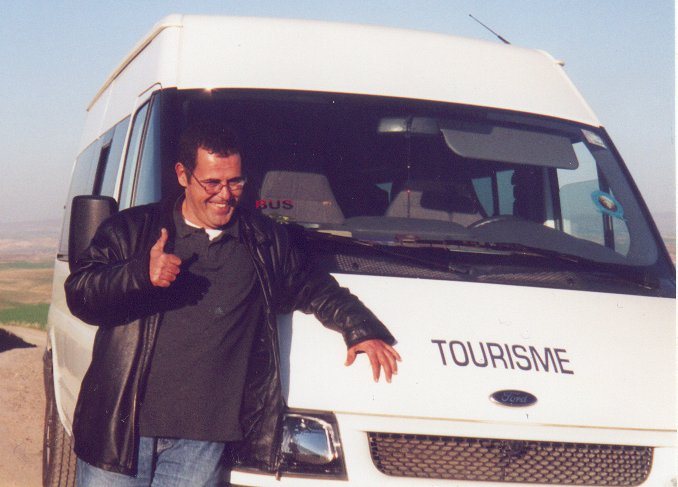
I spent the month around the start of 2014 in Morocco. It was my second time. Nine years earlier, I’d come on a guided tour with my wife at the time, and the company had subcontracted us to a guide named Mohammed. By the end of those ten days, he was a friend for life.
Back then, I had a policy. There were so many places in the world that I’d rather go somewhere new than return somewhere I’d been. But by this point in my trip around the world, my definition of home had changed. I no longer felt attached to living in any one place. Going back to Morocco felt like catching up with a different room of planet home.
The first time
On that first trip, in 2005, we were the only couple on the tour, so there was no busload of other Americans and no group itinerary. Every interaction was with real Moroccans. Mohammed drove us from Rabat, through the Thursday souk at Alarbiaa, to Taza, where we stayed three nights with his cousins.
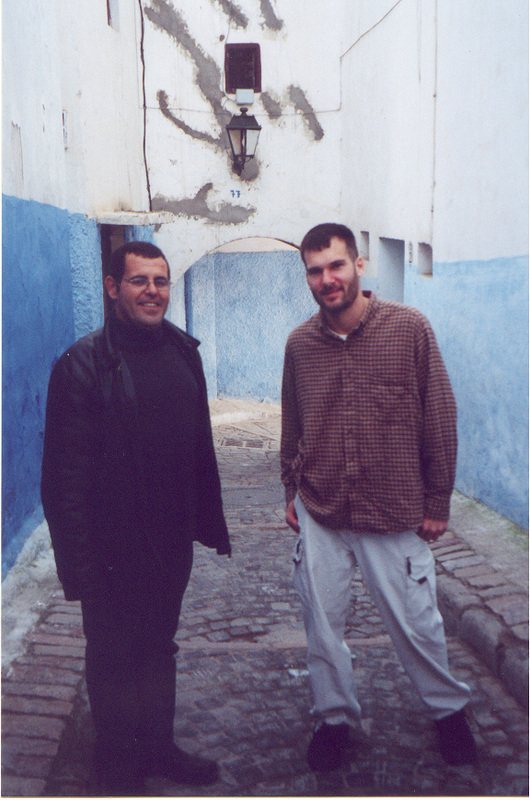
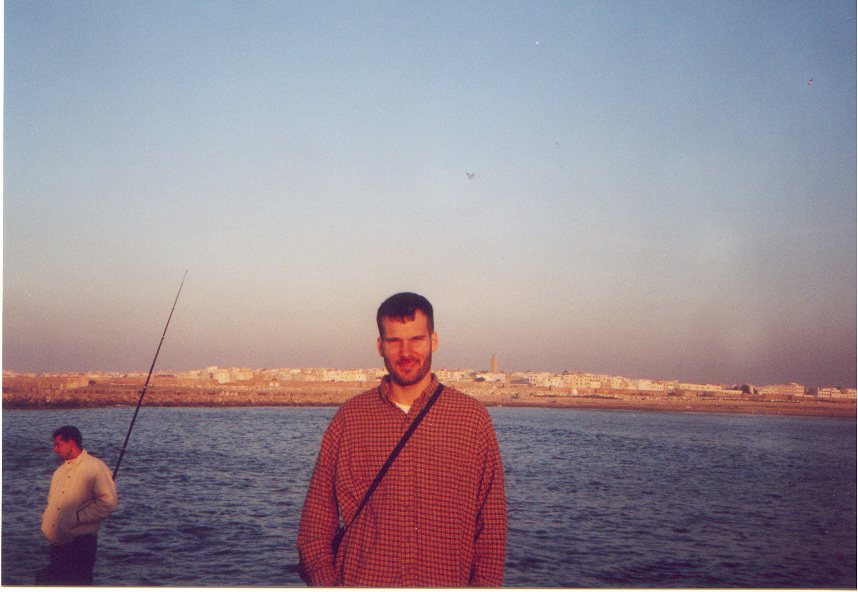
Respect and courtesy run deep in Morocco. Our hosts gave us their own bed and slept on the couch. They switched from Arabic to French so we could follow the conversation. And at every meal, from one shared plate, the men insisted, “You must ate! You must ate!” We were never hungry.
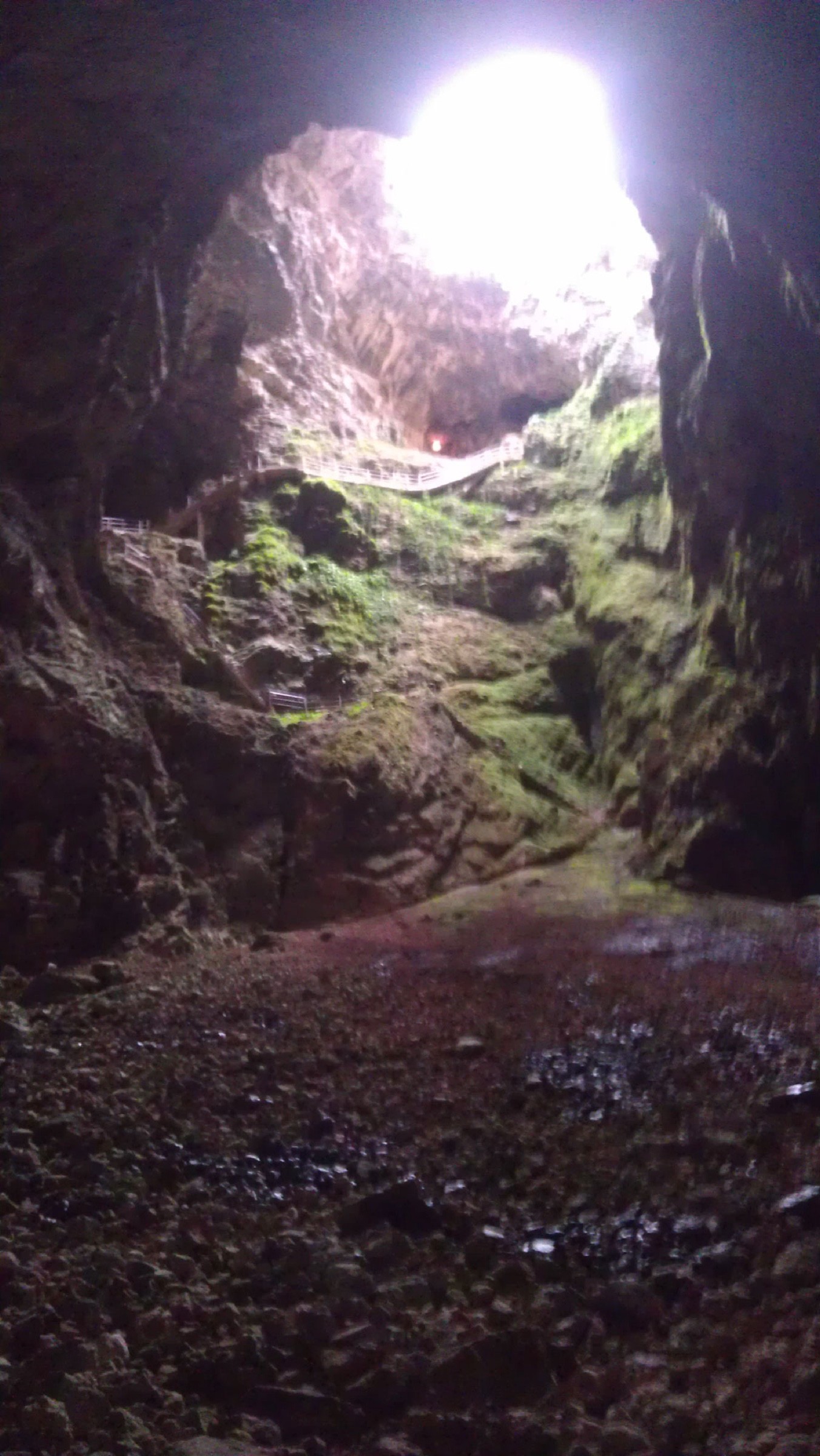
My name, it turns out, is a word in Arabic. Russ means “head.” When Mohammed called me in public, people did a double take. In a cave near Taza with no lights, no helmets and no fee, the guide kept telling me to “watch your Russ.” The first time I used a squat toilet in the floor, I proudly reported to Mohammed that I’d hit the target. He called me “the sniper.”
I always had a feeling I’d be back.
A flat full of tour guides
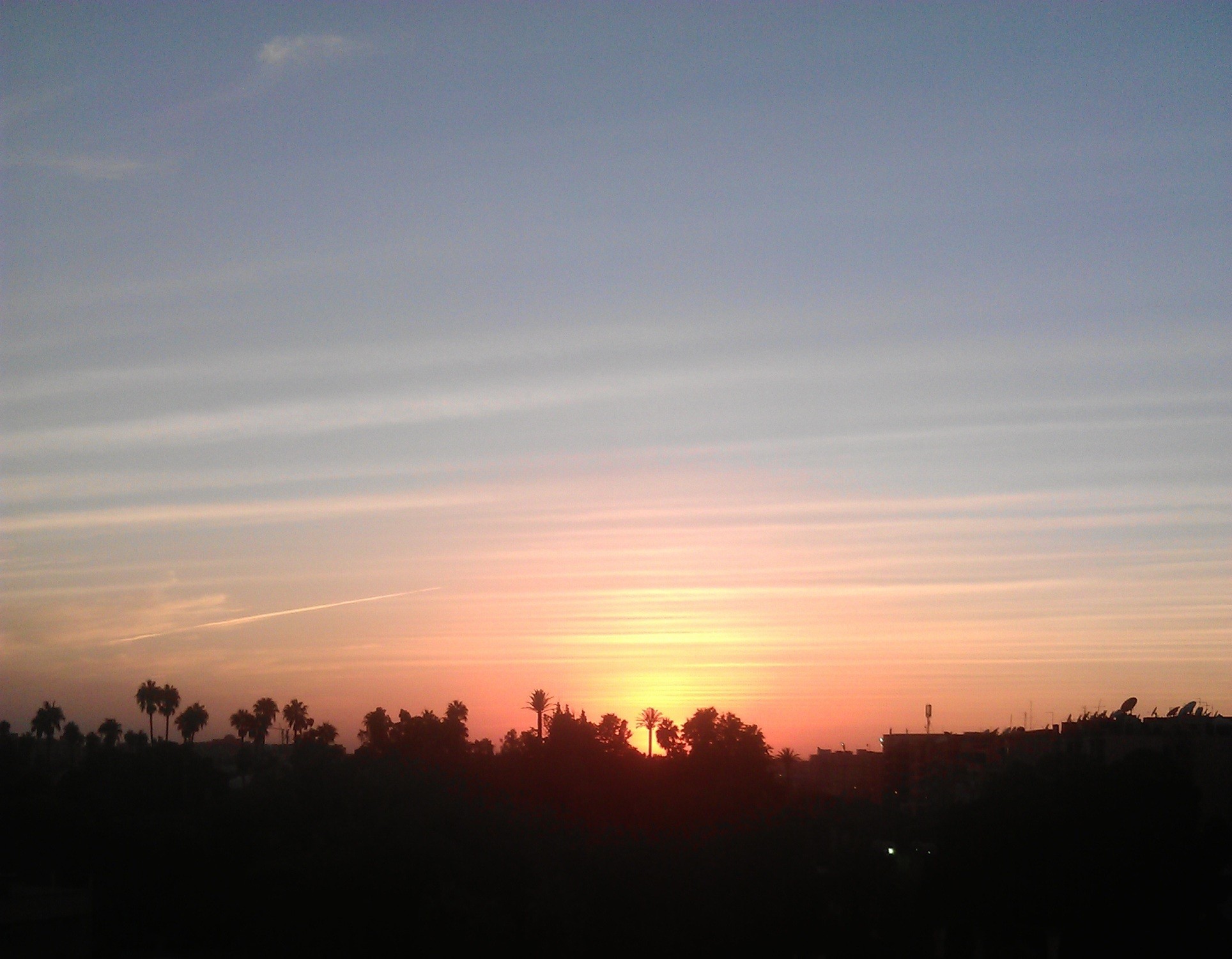
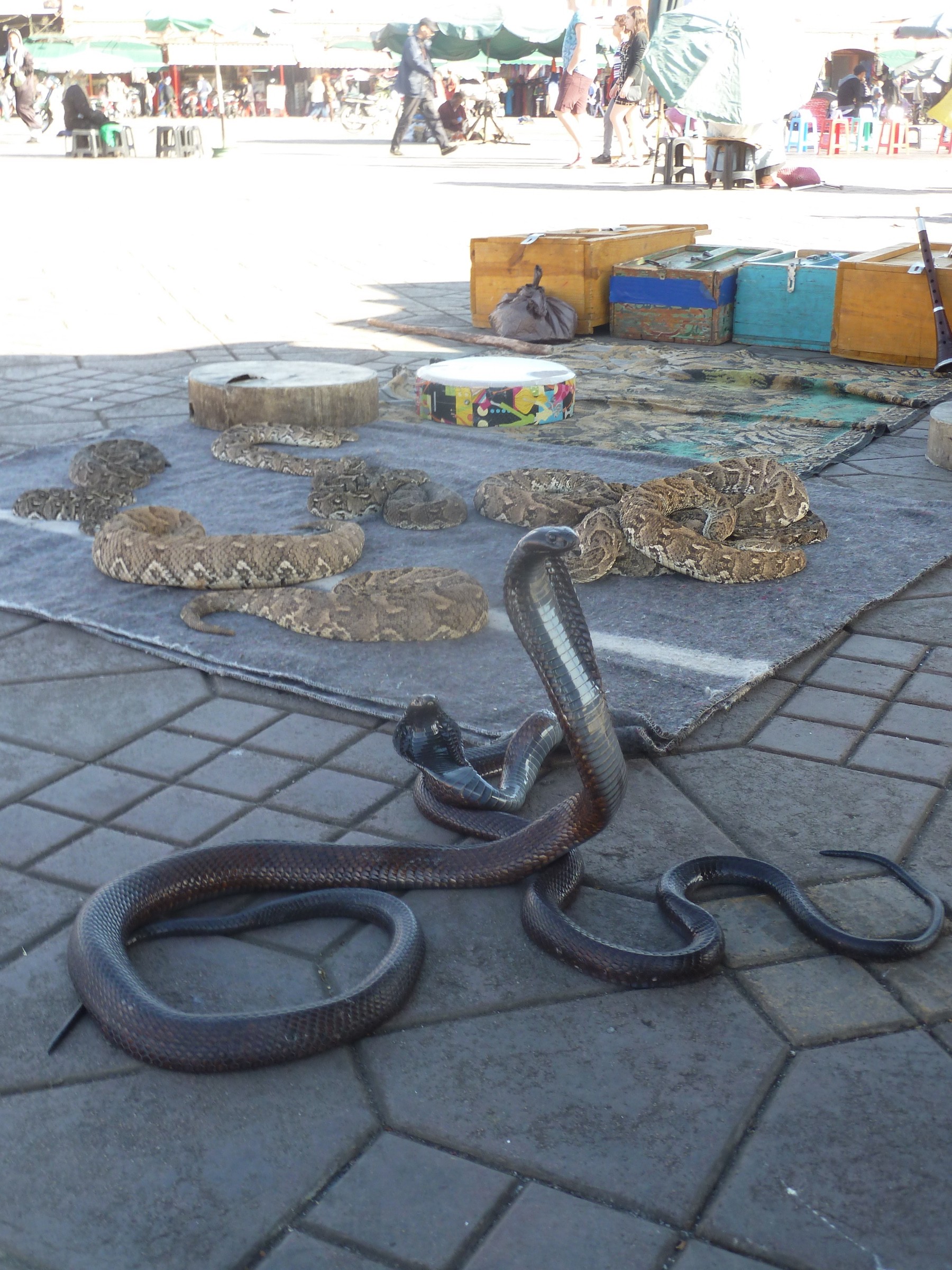
In Marrakech, Mohammed’s cousin Khalil picked me up at the airport. His English came back to him slowly and had improved since we first met nine years before. The universe provided a top-floor flat with a terrace, a puppy, and four tour guides: Mohammed, Khalil, and their housemates Lufti and Zappa. On any given night, one or more of them was out on tour, so I would shift between the guides on their days off to make the most of thirty-one days with locals.
For my first two nights, they gave me the best bed in the house. It was tradition for hosts to go out of their way for guests, and not something a guest could decline. At meals, they pushed food toward my side of the communal plate. The polite thing was to gorge myself in gratitude.
Reaching the Atlantic
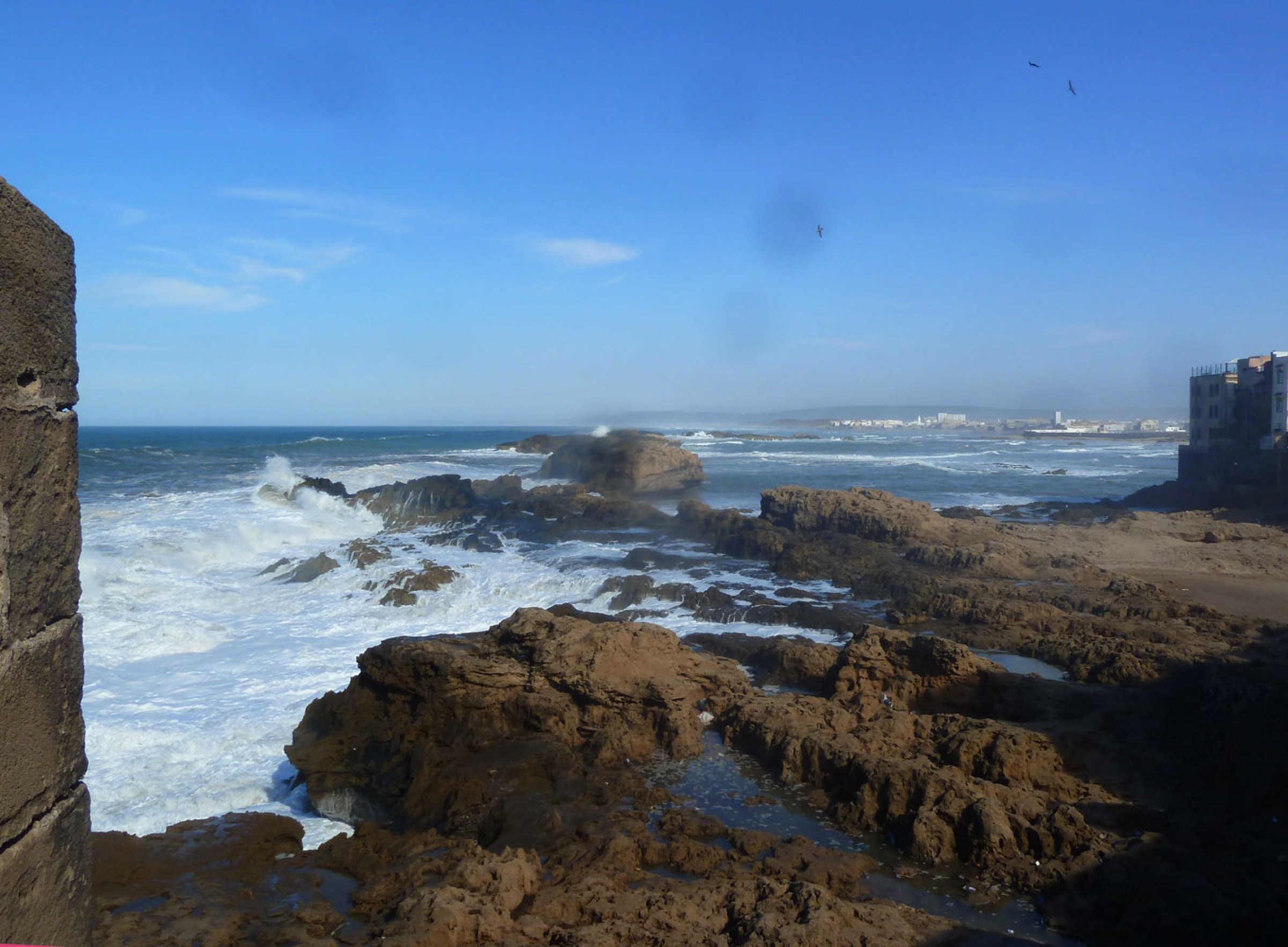
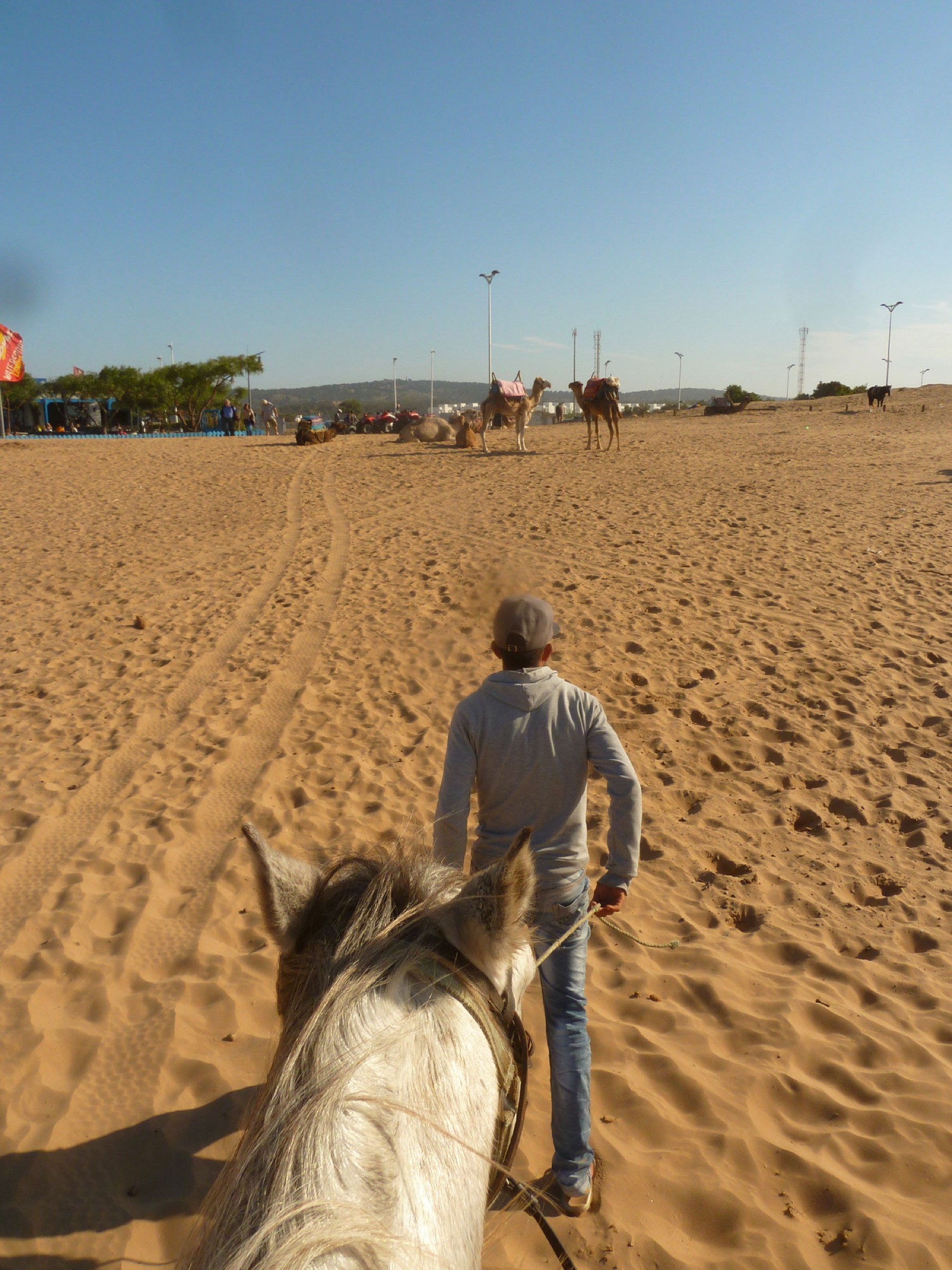
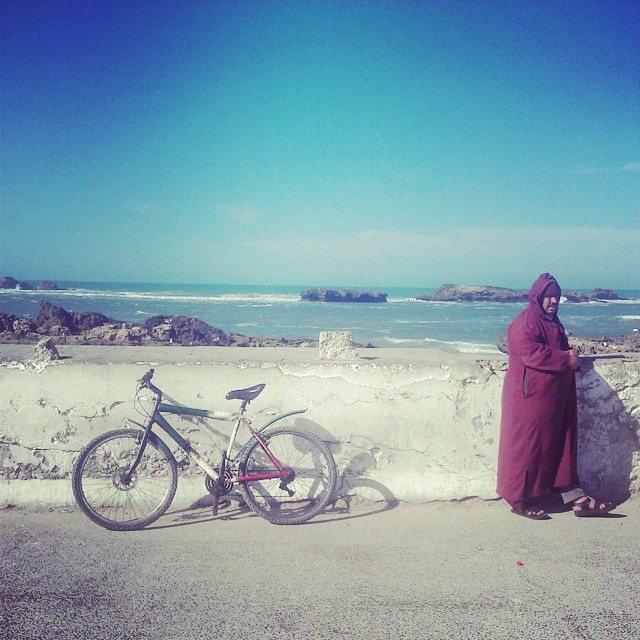
At Essaouira, I watched the Atlantic Ocean’s waves crash against the sea wall. I had come all the way around from the east. A young guy on the beach offered to take me south to the village where Jimi Hendrix once played. “For 100 dirham, you can ride my horse there,” he said. I took him up on it, and rode his pony while he walked it to a coffee shop with old Gnaoua music festival flyers on the walls.
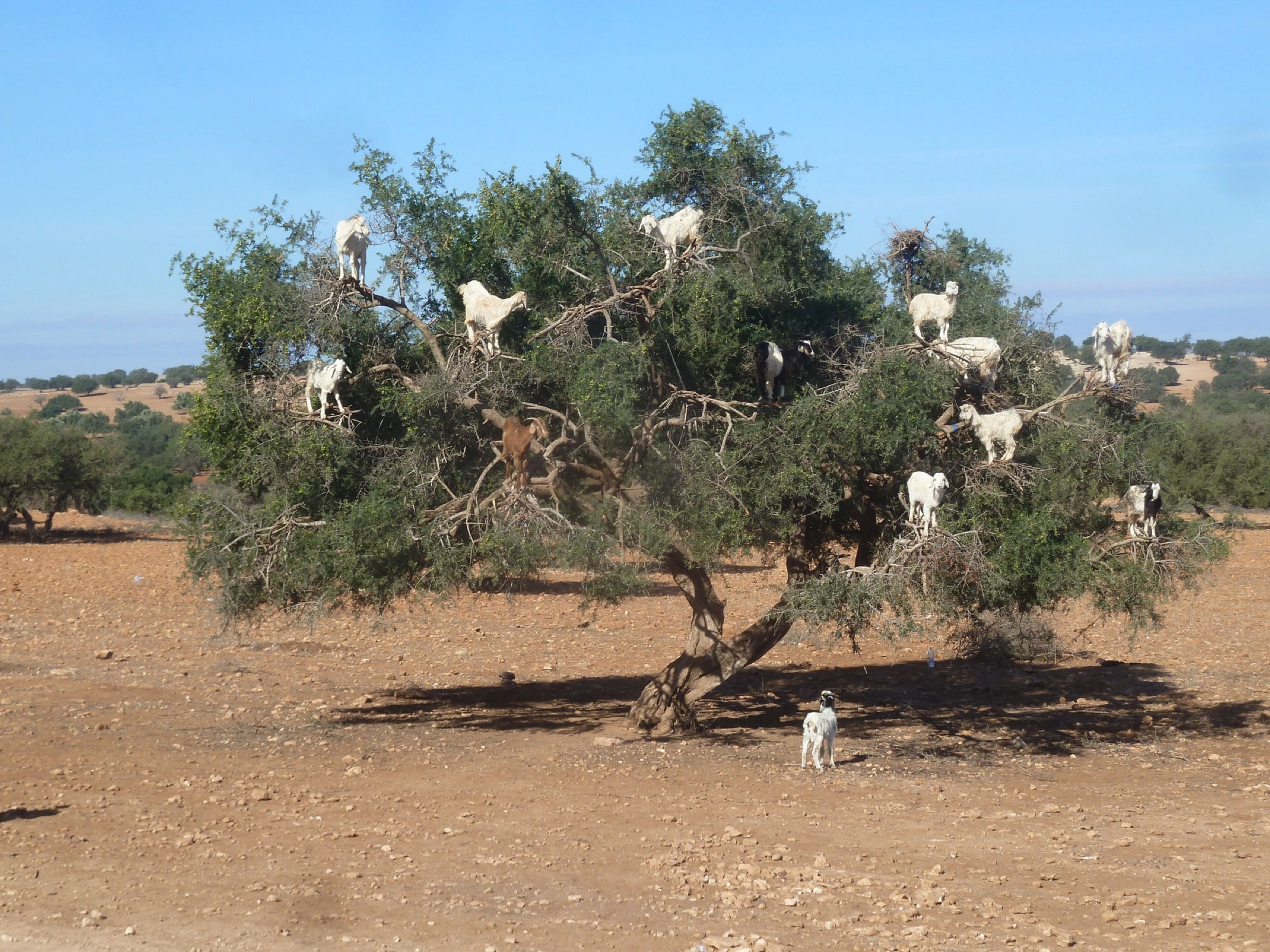
On the drive home with Mohammed, we crossed a vast expanse of open country and stopped to watch animals climbing the argan trees for the fruit. Their dung is collected to make the famous Moroccan argan oil. One of them fell two meters from a branch to the ground. I snapped before-and-after photos.
Gözde
A week after I arrived, Gözde flew in from Istanbul. We’d met in Turkey, and between Turkey and Morocco we would spend only about six weeks together, but they were intense enough that I’d later call her a love of my life.
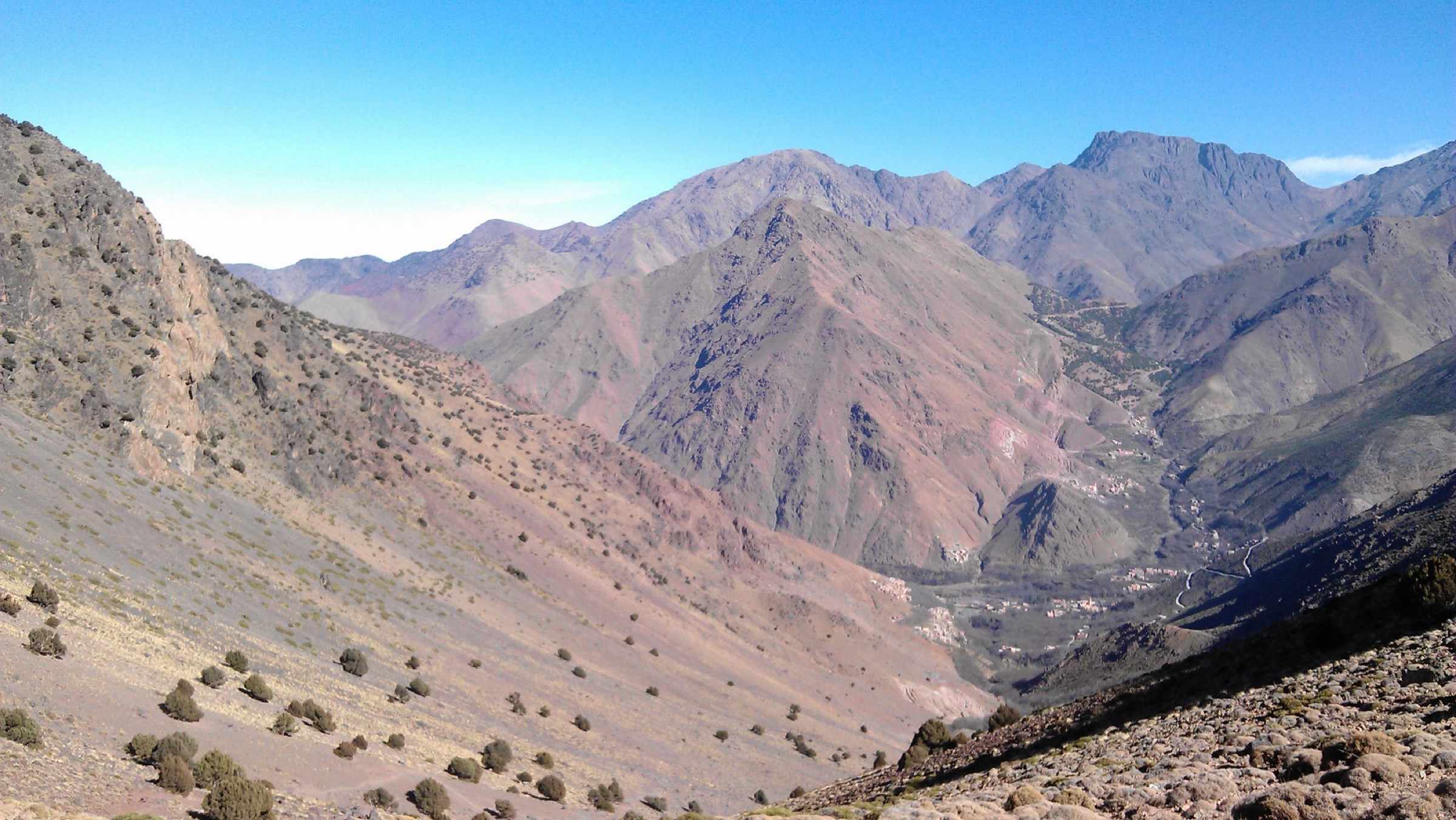
Our first adventure was two days in the High Atlas Mountains above Imlil. Each afternoon we climbed a mountain. A rented mule carried our backpacks, the food and the kitchen, and sometimes the mule owner, who was also our chef. At 100 dirham a day, he was well worth it. The two nights in nature were breathtaking.
A double date across the desert
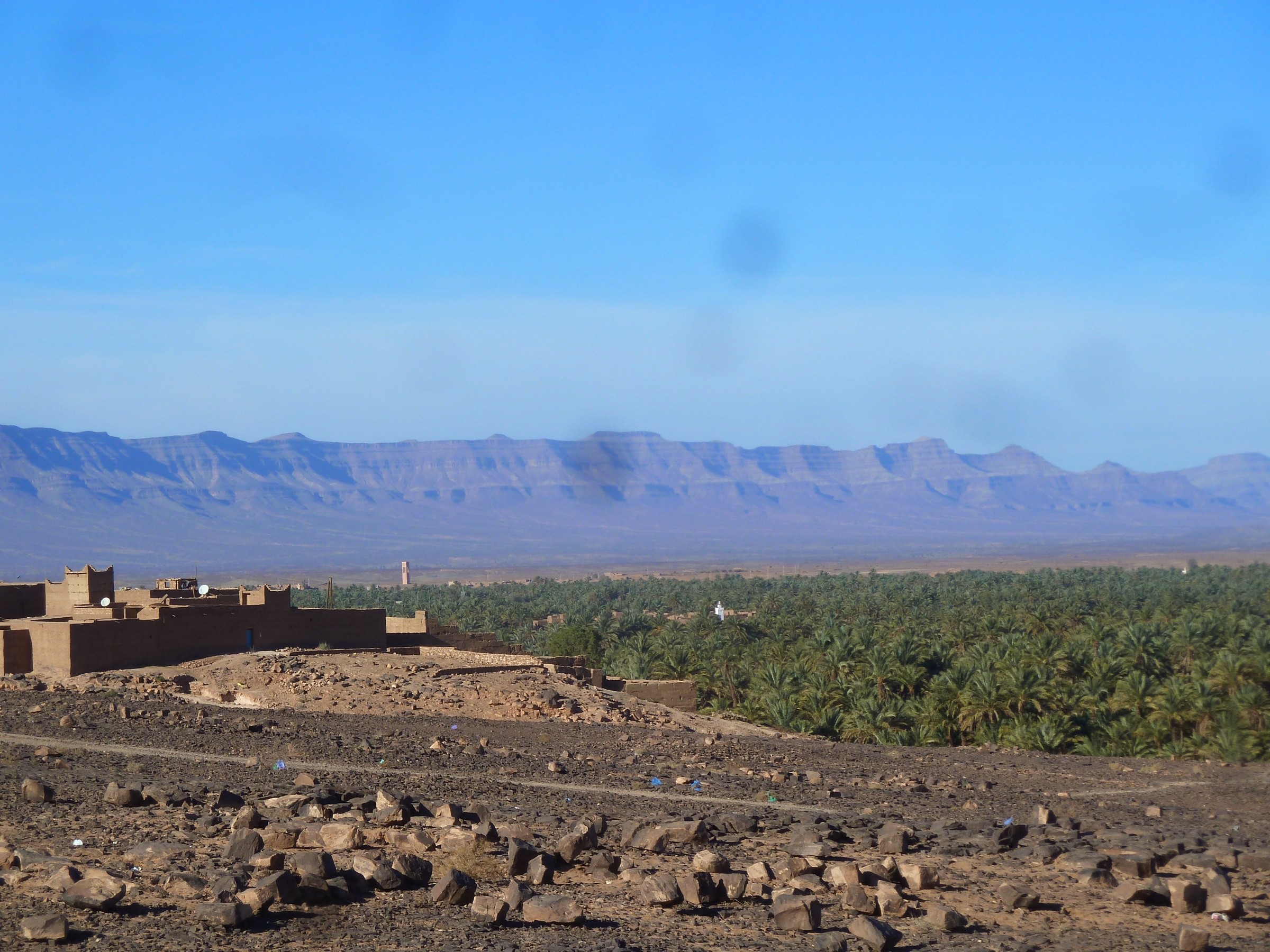
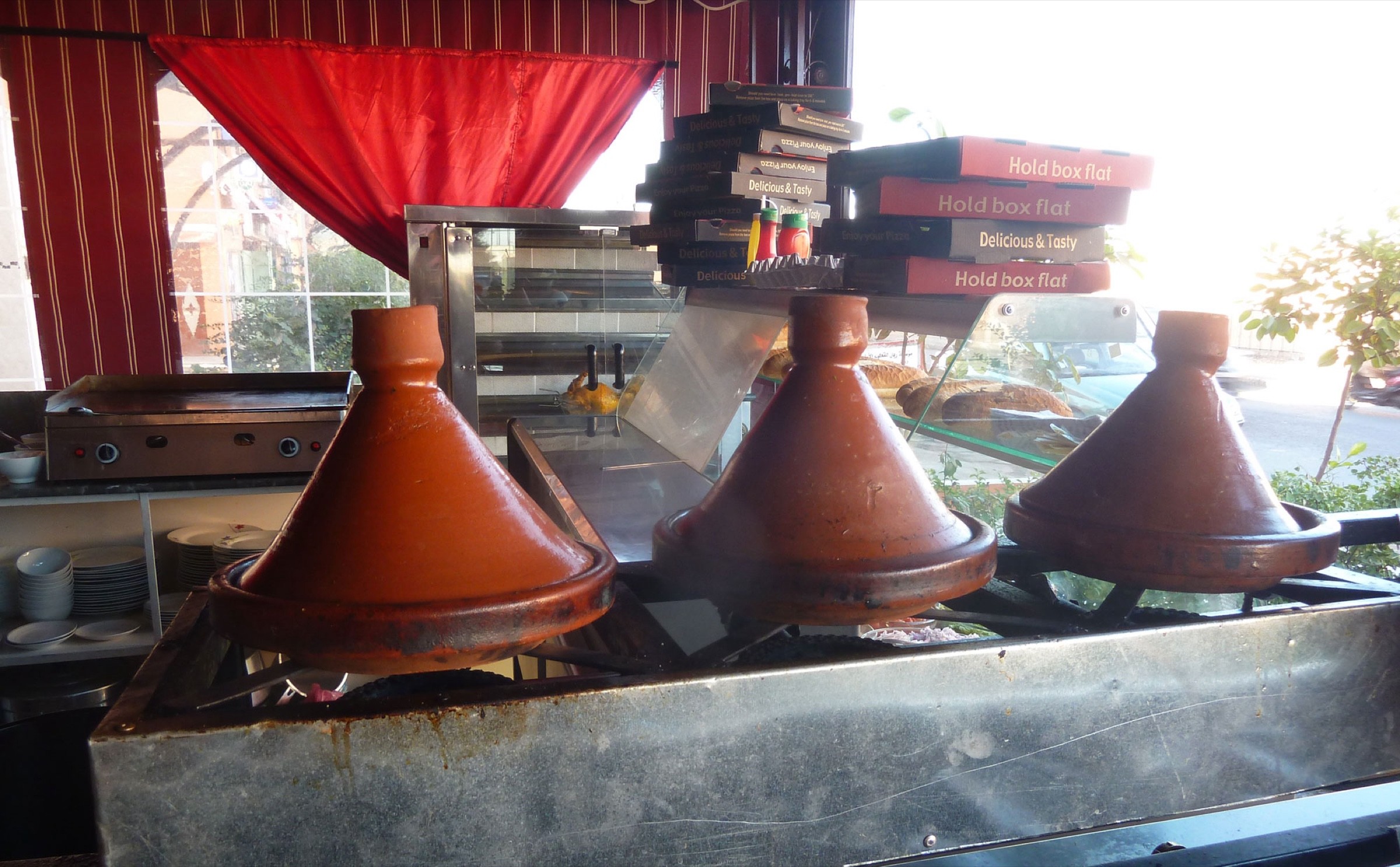
At the end of December, Zappa’s girlfriend flew in from Montreal. Zappa, a minibus driver by trade, rented a small car, and the four of us set off on a double date like no other. Zappa took mountain hairpins and passed slower cars like a Formula One driver. We ate lunch on a terrace with a view at Tizi n’Tichka and stopped at the Draa Valley, a forest of palm trees in the middle of the desert with mountains in the distance. It was one of Morocco’s many surreal landscapes. Small children asked for change while tourists took selfies, and a policeman hitched a ride home by switching from a tour bus to a dump truck.
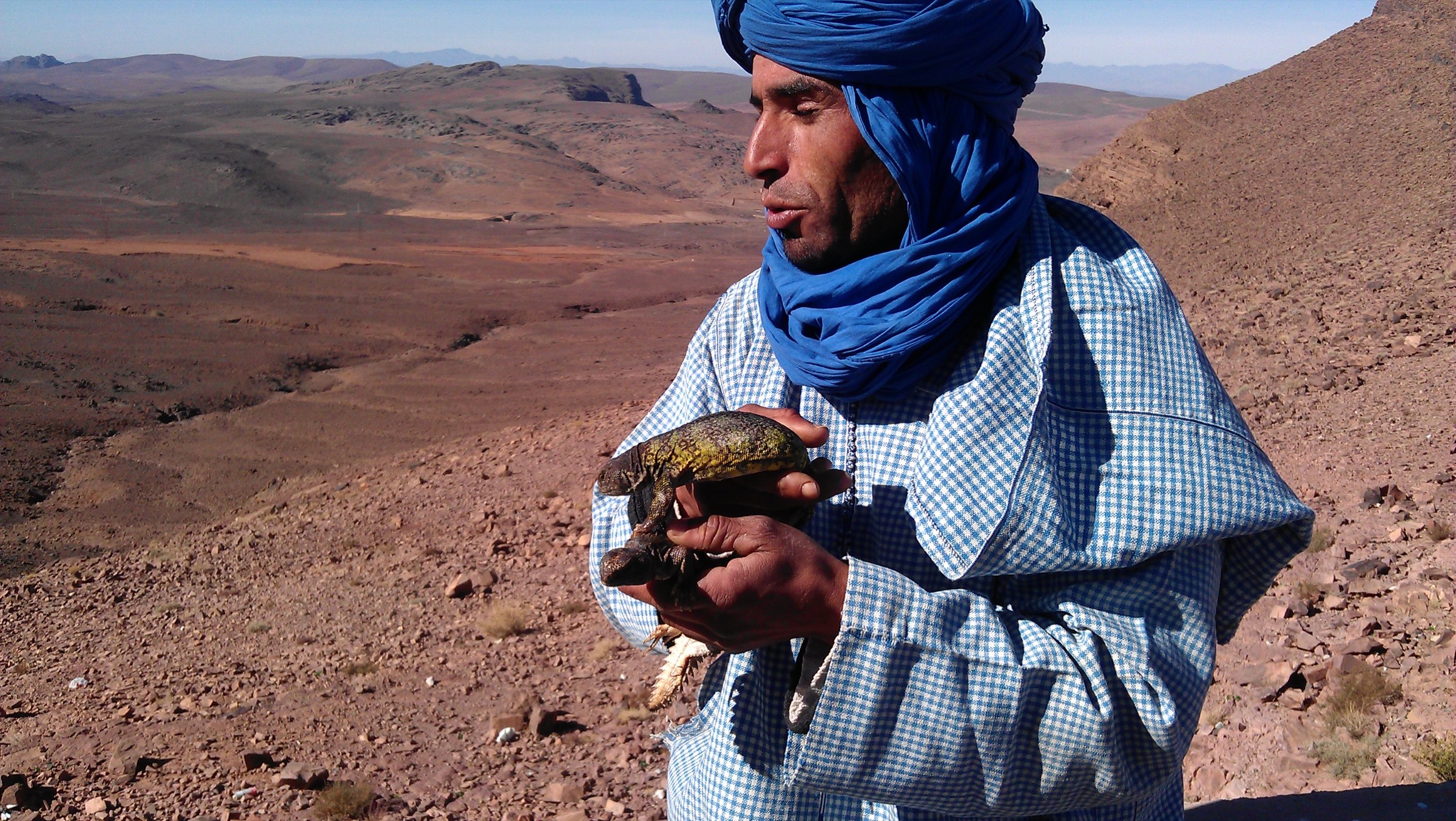
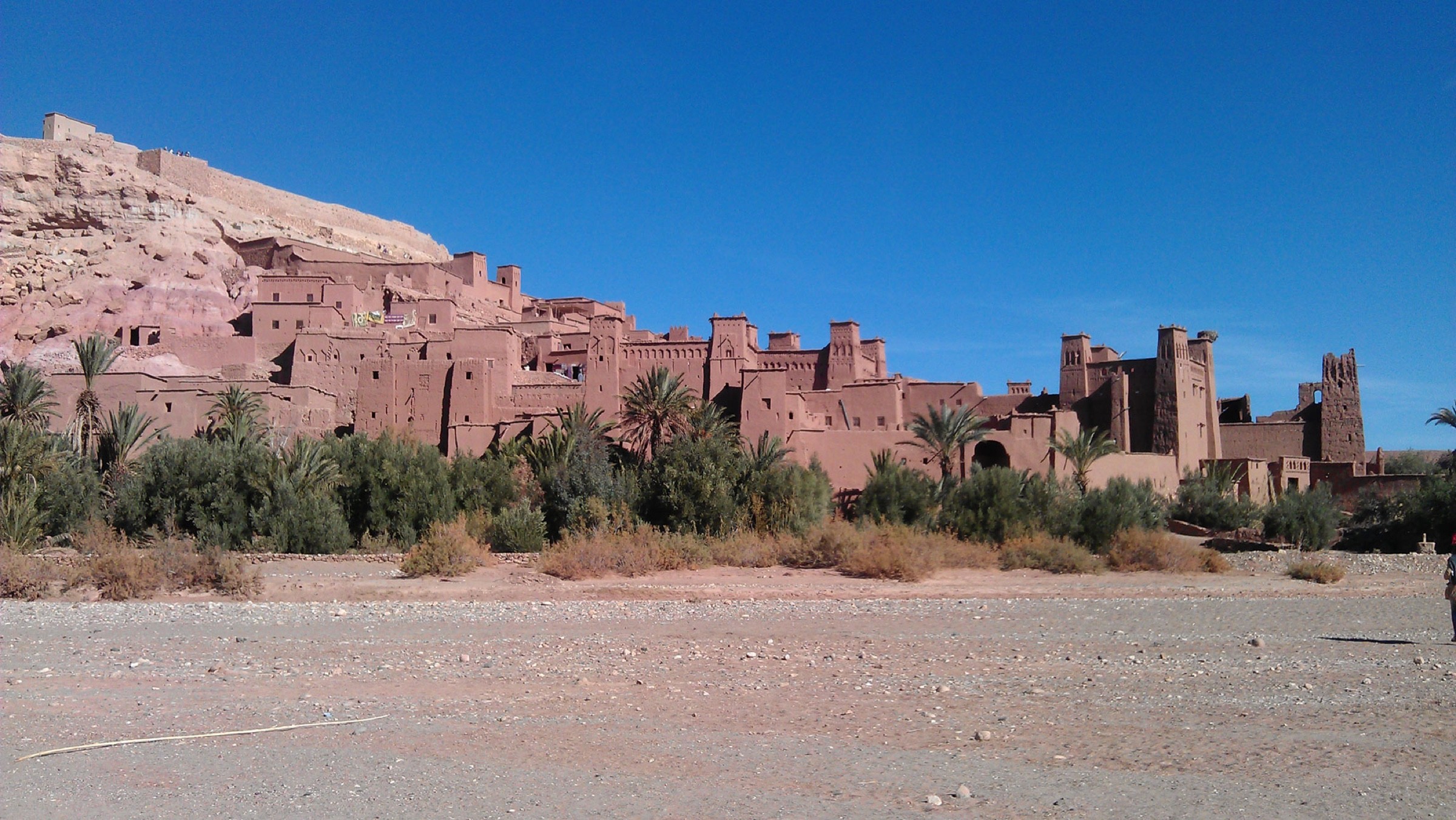
After a night in Ouarzazate, we woke on New Year’s Eve with an intention to ring in the new year in the Sahara. Past Zagora, a 4×4 took us the last few kilometers across a desert of fossils and rocky ledges to a bivouac, a tent camp for visitors. Gözde politely turned down the shared tent: “I’m with my boyfriend, and we don’t have that much time together.” We got our own.
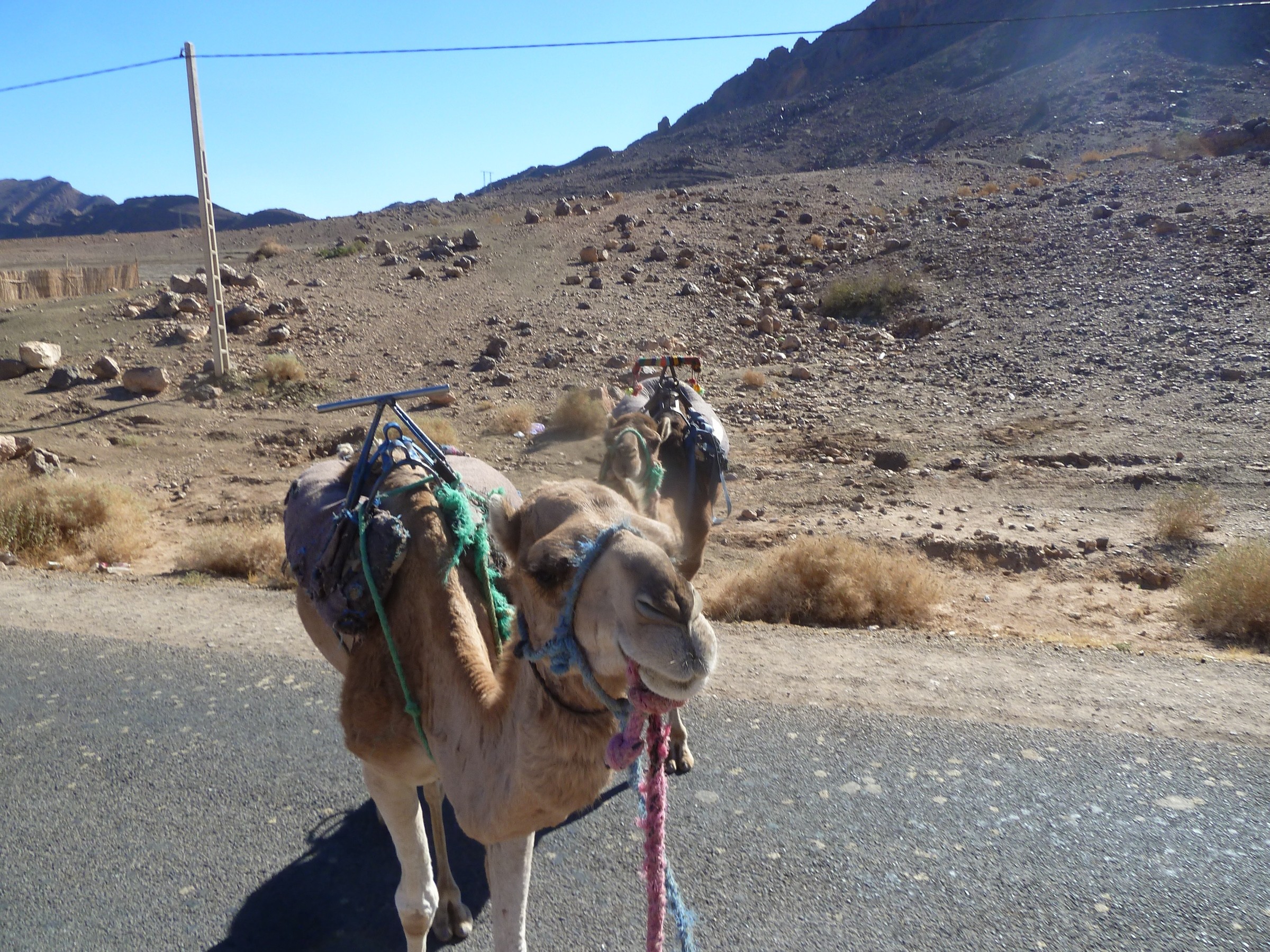
Three men and three women performed traditional Berber music by the dance floor, the men on drums and the women singing verses back to them in rounds, in tangled 6/8 rhythms and scales that blended Berber and Arabic. Then a DJ took over and cranked it until the speakers clipped. Nobody shared a single language that night, which was probably why they turned it up. They needed a silent disco. The camp’s countdown came at least five minutes late, so we’d already toasted 2014 by the time it played, in Spanish. The next morning, Gözde and I took our first camel ride through the valley. Even if it was only a kilometer, riding a camel in the Sahara was a life experience.
The camera in the toilet
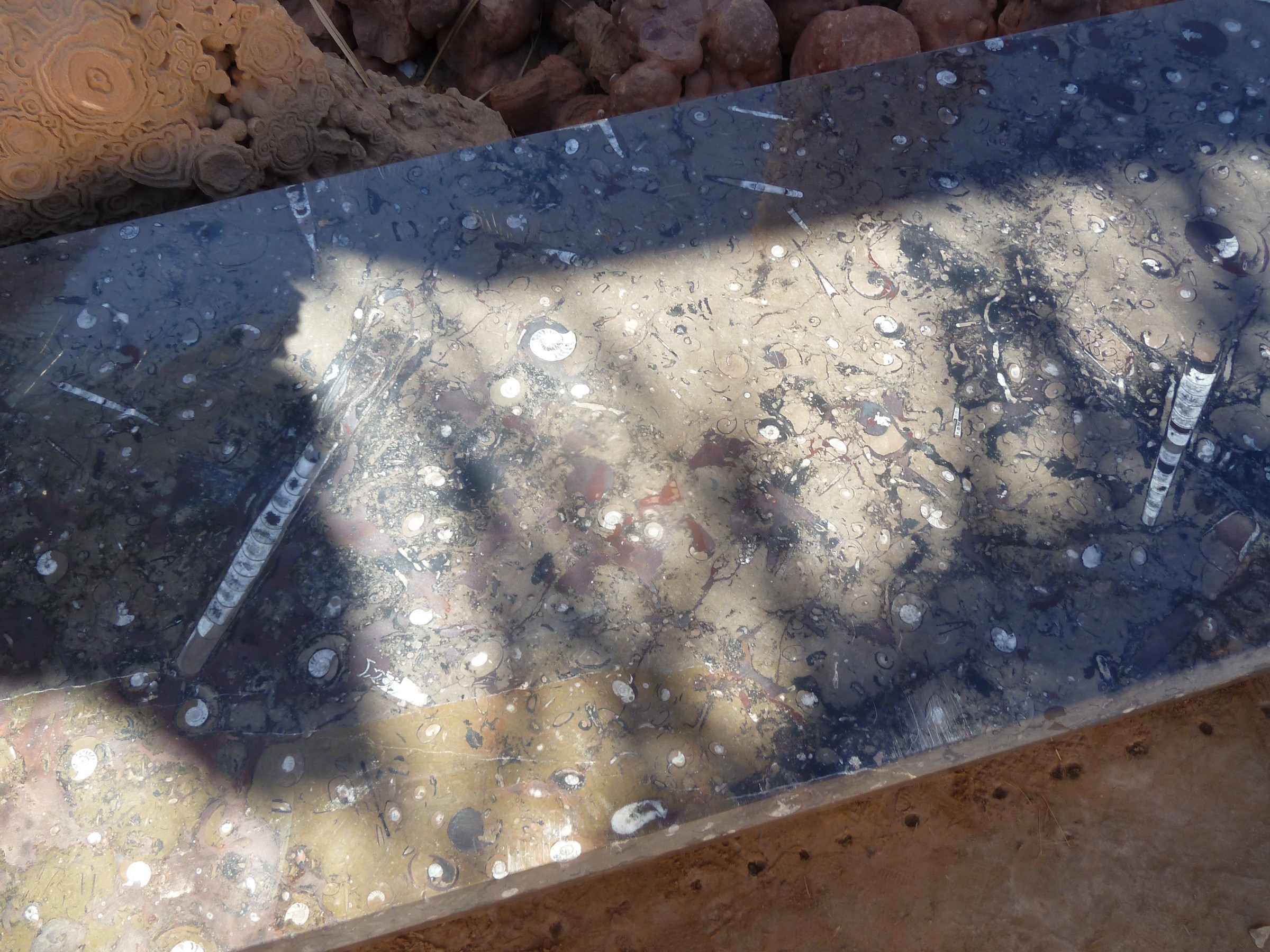
At Erfoud, once the floor of a flourishing ocean, a workshop made kitchen countertops out of fossil stone. Fossilized countertops! I bought a small fossil pendant. Then I went to the restroom, and as I lifted my hoodie, my digital camera slipped out of my pocket and splashed into the toilet, still unflushed from the last visitor. In automatic mode, I plunged my hand in and grabbed it, shouting profanity. The memory card survived. The camera didn’t. Zappa tried to blow it out with a tire compressor, but it was smartphone pictures from there on out. Digital cameras were so 2000s anyway.
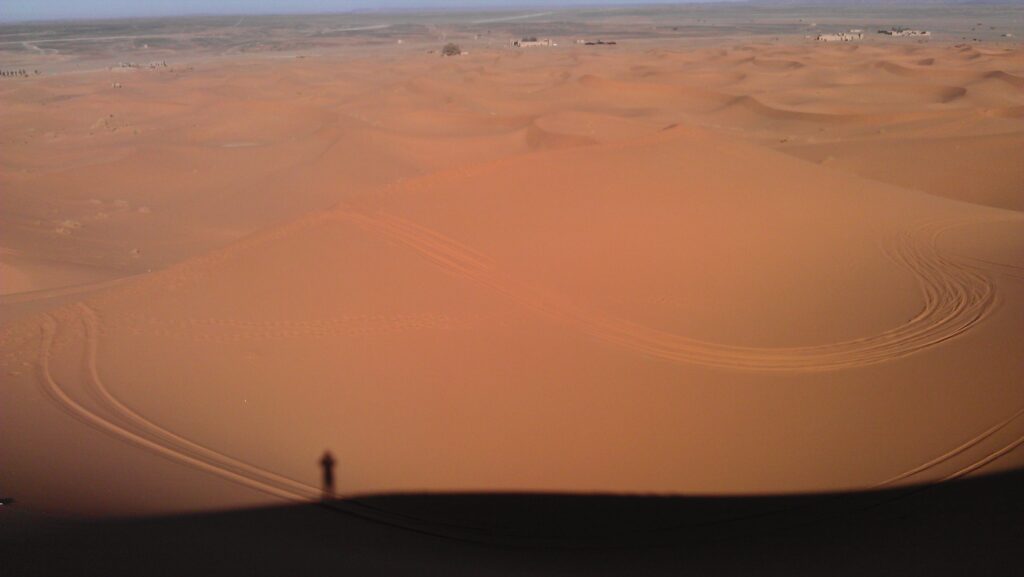
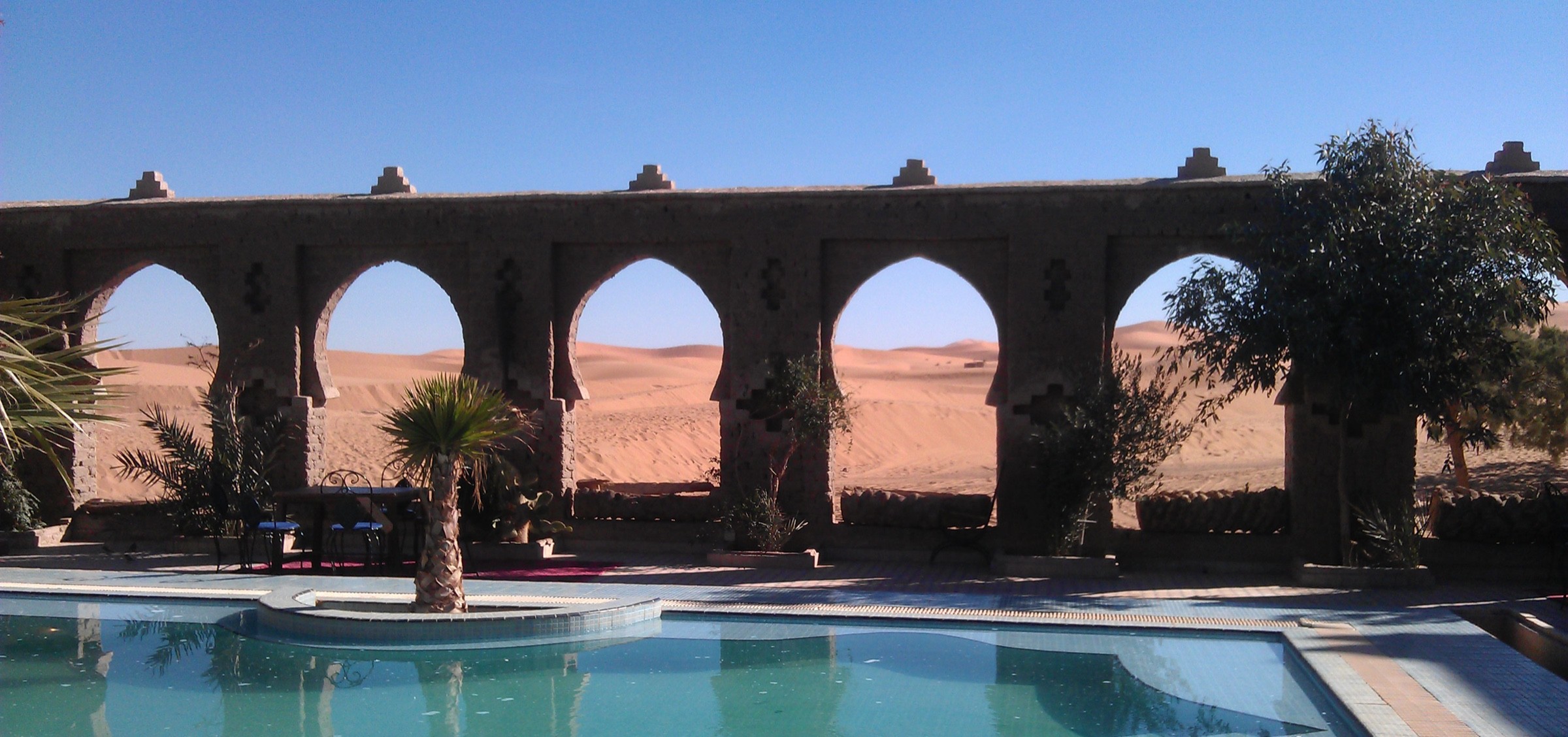
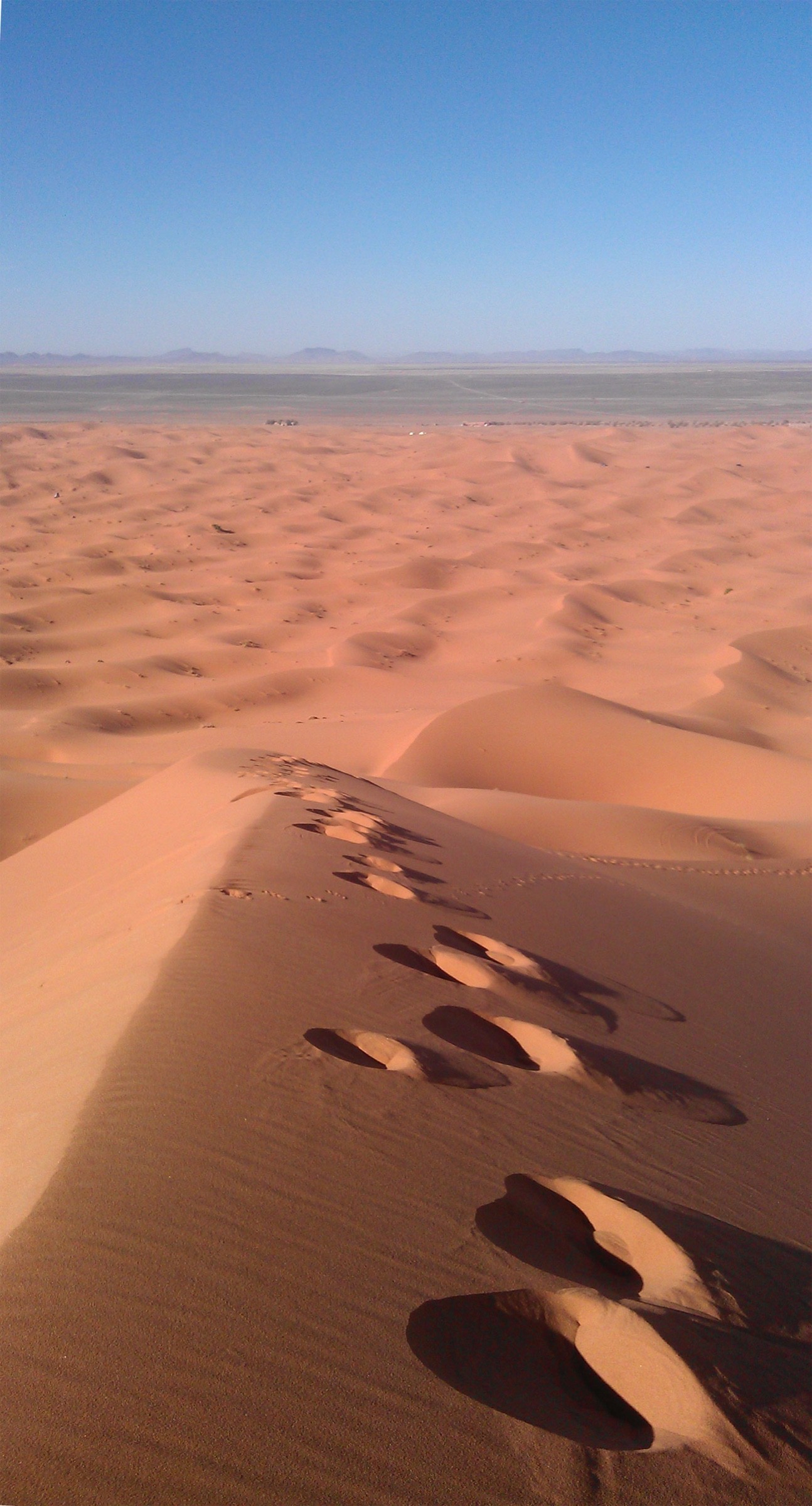
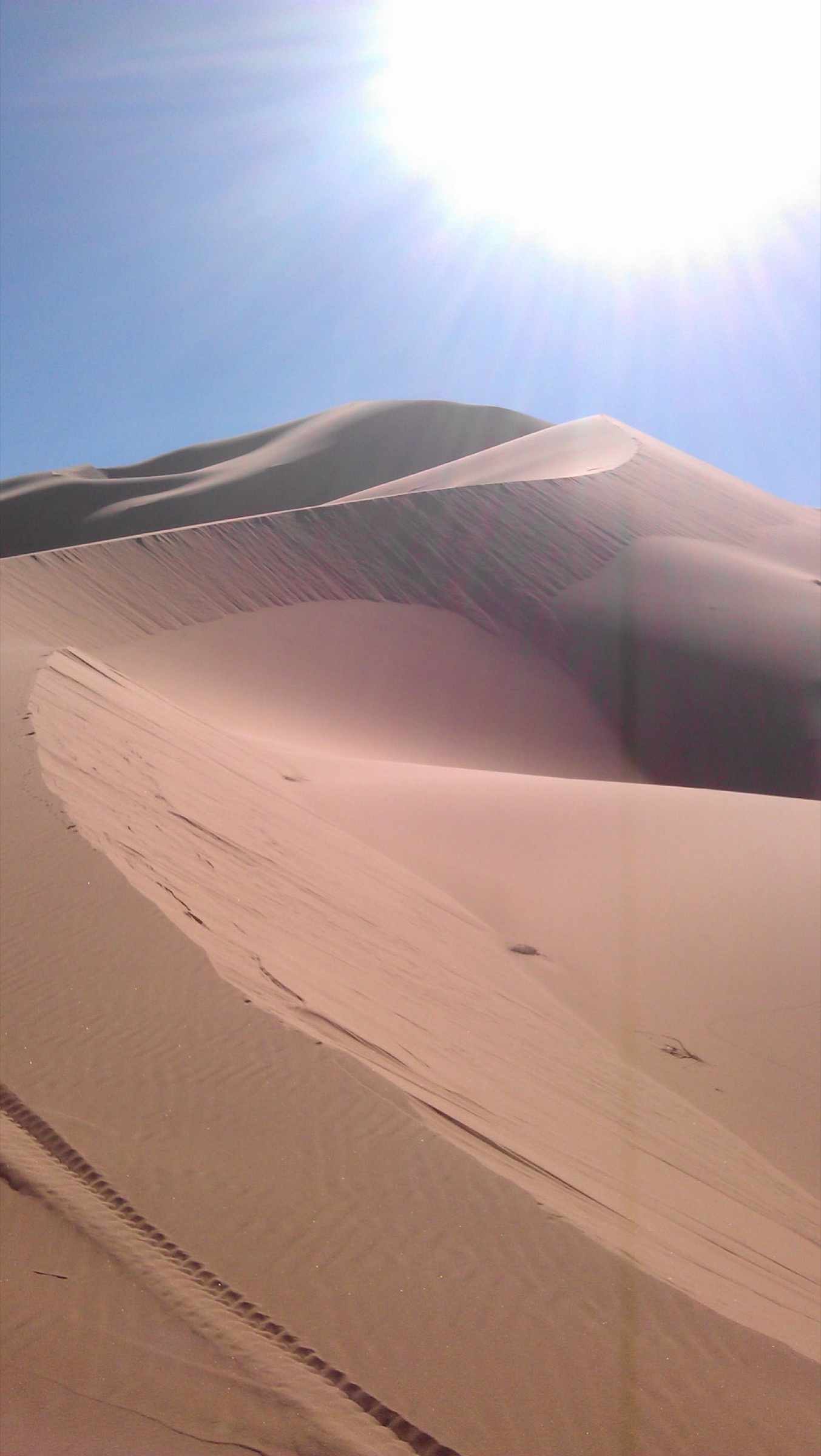
As the sun went down, Zappa turned off the main road onto a rocky track and made one seemingly random turn after another across featureless open space. Gözde and I looked at each other but knew we were in good hands. When the lights of guesthouses appeared, we pulled into Auberge du Sud at Merzouga. Mohammed had sent so many travelers to places like this that he was welcome to bring friends for free, and he’d given his freebie to us. I’d been to Arizona, Dubai and Australia, but I’d never seen dunes like the ones in the movies. It turned out many movies had been filmed right there.
Behind the farthest dune
One morning I walked out alone to see what was behind the farthest dune we’d seen the day before. It was another dune, of course. I kept going, one after another, each bigger than the last, hoping to reach a spot with a full panorama of the desert ringed by mountains. Then I noticed I’d forgotten my water.
Ahh, whatever. I ventured on. The desert distorted my sense of scale. The last dune was more mountain than sand. I dropped to my knees and crawled, ledge after ledge, each false summit revealing a higher one, until I realized I was in the middle of the Sahara, alone, with no water, and everyone was waiting for me. A guided meditation I’d written back in Austin began in desert sand dunes. Now my visualization had become a physical experience. I leapt down the dunes, rolled once, and ran back toward camp, only it was the wrong camp. When I finally found ours, an unimpressed crew awaited.
“Where were you?”
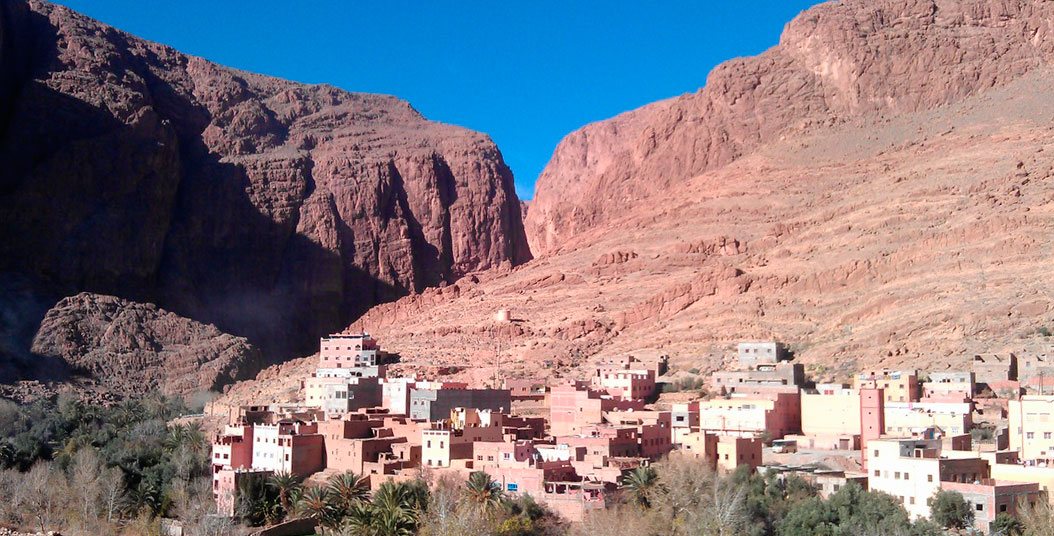
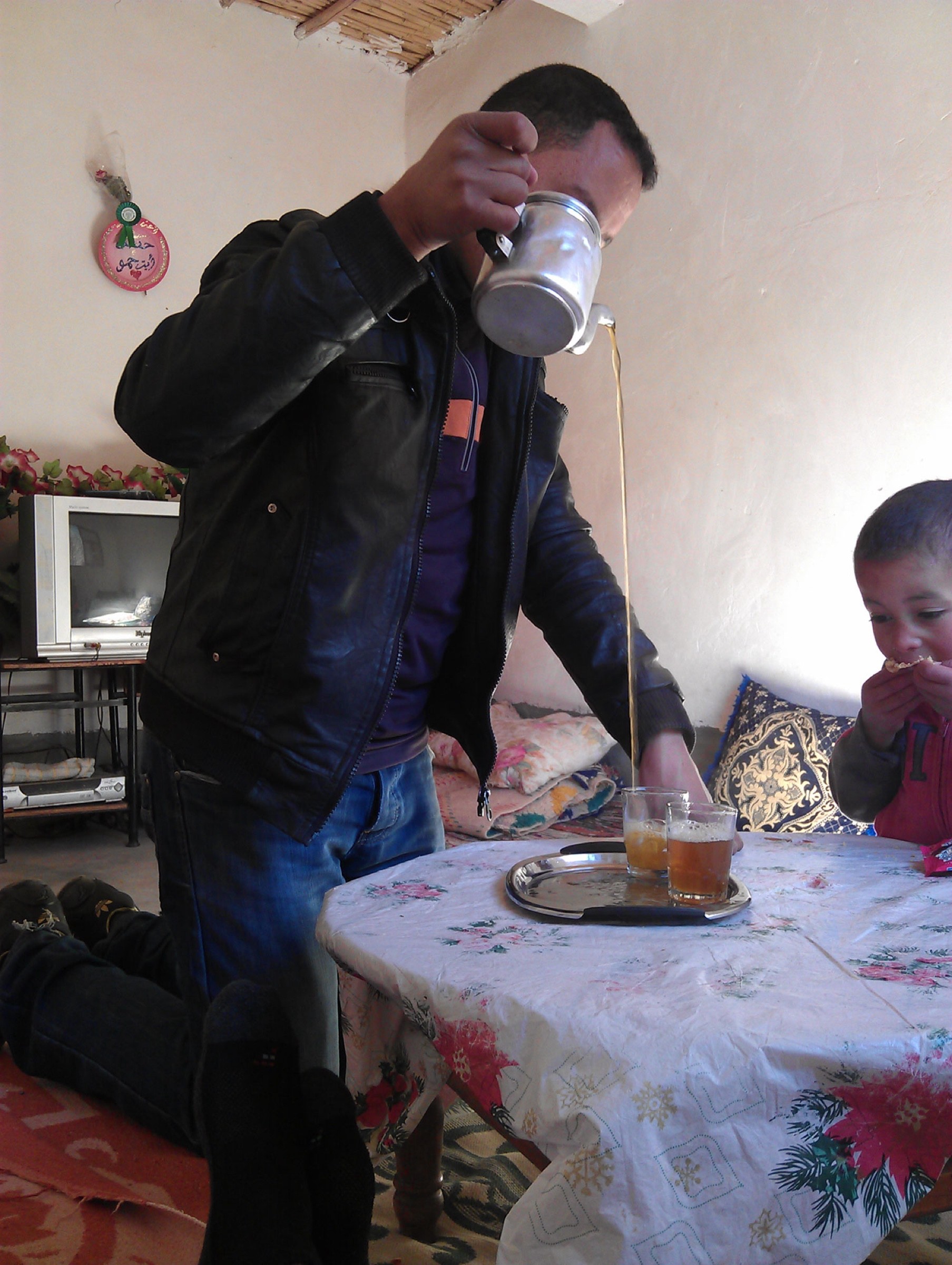
On the way back, we spent a night in Todgha Gorge and took a midday trek into the mountains with a family friend as our guide, on half a liter of water for the two of us. Gözde felt it was even harder than the Atlas. We made it back with an empty bottle and sat for tea with a man in the village who then tried to sell us carpets. I tipped our guide well.
Back in Marrakech, the crew took me to the hammam, a public steam bath, where I ended up flat on the tile floor in my underwear while a man scrubbed my entire body with an exfoliating mitt. It was less ceremonial than a Turkish bath and more workmanlike. Scrub! Scrub! Dump the bucket!
Fes, nine years later
Then we caught the train north. Geographically, culturally and historically, Fes is the heart of Morocco. It felt like home. At Mohammed’s wife’s place, just as nine years before, he gave me the best bed in the house.
We met the family. After nine years, Mohammed’s wife hadn’t changed a bit. The only difference was that the child she’d held back then was now ten years old, and she was holding a new one, with a four-year-old running around in between. The old woman in the scene last time had been Mohammed’s sweet mother. Now it was his sweet mother-in-law. The pattern was tradition.
In the old medina of Fes, Gözde and I bought lanterns for friends. On the way to meet Mohammed, a man on the sidewalk was shouting “D dirham! D dirham!” over thirty packaged shirts and sport coats as a crowd picked through them. “Ten dirham!” A sidewalk dollar store. An old man pulled out a plaid sport coat and marveled at it. In the excitement, we joined the melee. The old man put the coat down and walked away, and only later did we realize we’d missed the chance to buy it for him.
The wedding
Over coffee, Mohammed reminisced about my first trip. Toward the end of it, he’d stopped to buy beer for his uncle in Casablanca, and before we got there, his uncle had passed away. Weddings and funerals have a way of bringing people together.
That night, Mohammed’s brother-in-law was getting married. The bride and groom were carried on thrones above the dancers, the groom grinning, the bride looking like she might fall at any minute. Later, the band called me up for a piano improv. I started in C, and it came out more Americana than Moroccan. Everyone but Gözde stopped and stared, entertained, while she danced wildly, happy to hear the sounds of the West.
Then I dropped the ball. Back home, my bandmate had a nickname for me, “Rushell,” for the times I lost track of my surroundings rushing to get somewhere or finish a goal. That night, when Mohammed came running to pull me inside to play piano for pictures, Gözde had just lit a cigarette and needed a minute. I prodded her to come, and then Mohammed and I set off on our mission and left her behind. Rushell. When I found her, she was hurt and angry. In a strange place where she knew no one, she’d been waiting what felt like an hour.
We still had to stay through dinner, which at a Moroccan wedding comes after midnight. If we left early, Mohammed said, people would think we hadn’t had a good time. When her head finally hit the pillow, she softened. “It’s my problem,” she said. “You came to Morocco to visit your family, and I came here to visit you.” By the next day we’d made up, but I kept it as a lesson to be present.
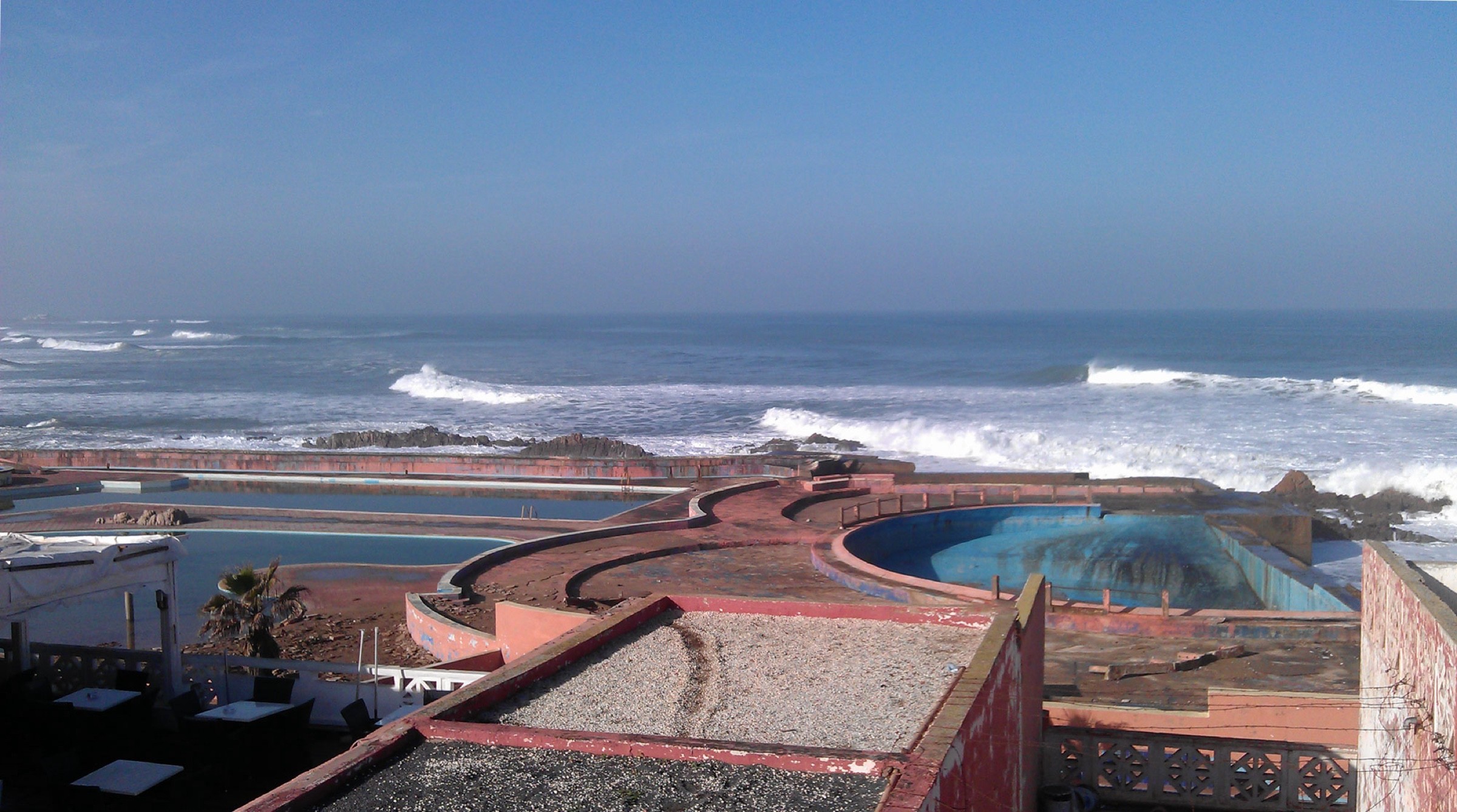
From Fes, we detoured through Taza to see more of the family, then drove to Casablanca with Mohammed and spent a damp night by the sea.
Yalla
We took the train back to Marrakech, where a driver Mohammed arranged met us holding a sign that said “Mr. Russ.” We had the flat to ourselves for Gözde’s last night, a good dinner and long, loving conversation before the sad reality set in. In the morning, I rode with her to the airport. After she checked in, we hugged one last time and promised we’d meet again. She started to tear up.
“It’s so stupid,” she said, embarrassed at crying.
Then she was gone, back to Istanbul. All week we had laughed about the word yalla. In Moroccan Arabic, it means “let’s go!” In Turkish, she said, it means “get out of my face!”
Nine years before, I’d left Morocco with a policy of always choosing somewhere new, because the world was too big to go back. This time I left knowing better. Some places, and some people, you keep coming back to. The world is big, but it’s also home.
Morocco, 2005 and winter 2013–14.