It had been too long since I took a beach vacation. When cheap nonstop flights from Denver to Cabo showed up, I opened the door. A week at the southern tip of Baja, split between Cabo San Lucas and San José del Cabo, was my first real stretch on the sand in two years.
Los Cabos sit at land’s end, with the Pacific to the west and the Gulf of California to the east. The water is clear and cool. The coarse tan sand turns turquoise in the shallows. Jacques Cousteau called the area the world’s aquarium, and after a few days of looking at it from boats, beaches, and a hill above town, I understood why.
The beaches
Cabo San Lucas has several beaches, each a little isolated from the others. San José del Cabo has one long stretch with powerful waves, better for surfers and people who like a bit of risk than for a casual swim.
Medano Beach is the most accessible, and the safest for swimming. You cannot stand very far out because of the depth, but the waves are moderate and buoys mark the swimming area. It sits in the heart of Cabo San Lucas.
Empacadora Beach is on the south side of the peninsula, cut off from the rest of town by the marina. You can walk all the way to the edge of town to reach it. The swimming is good, and it is much quieter. At low tide, little coves appear between the rocks.
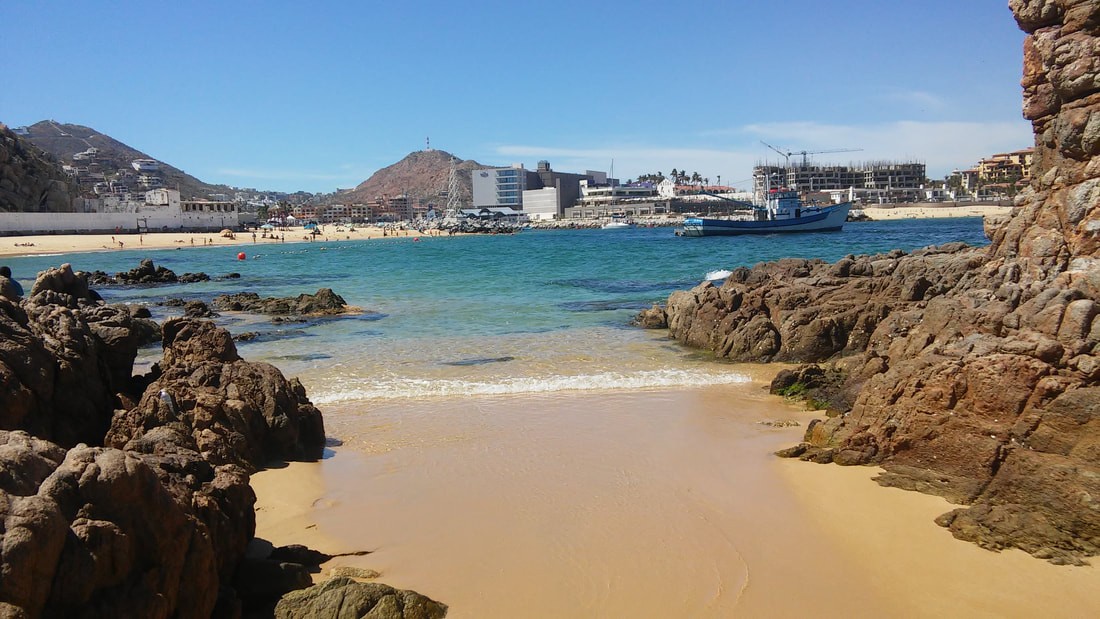
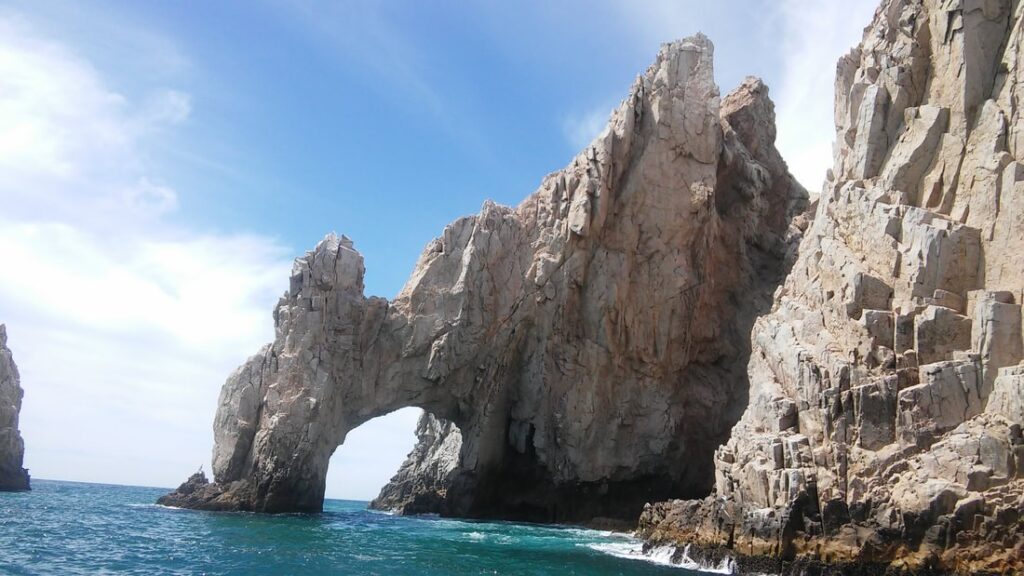
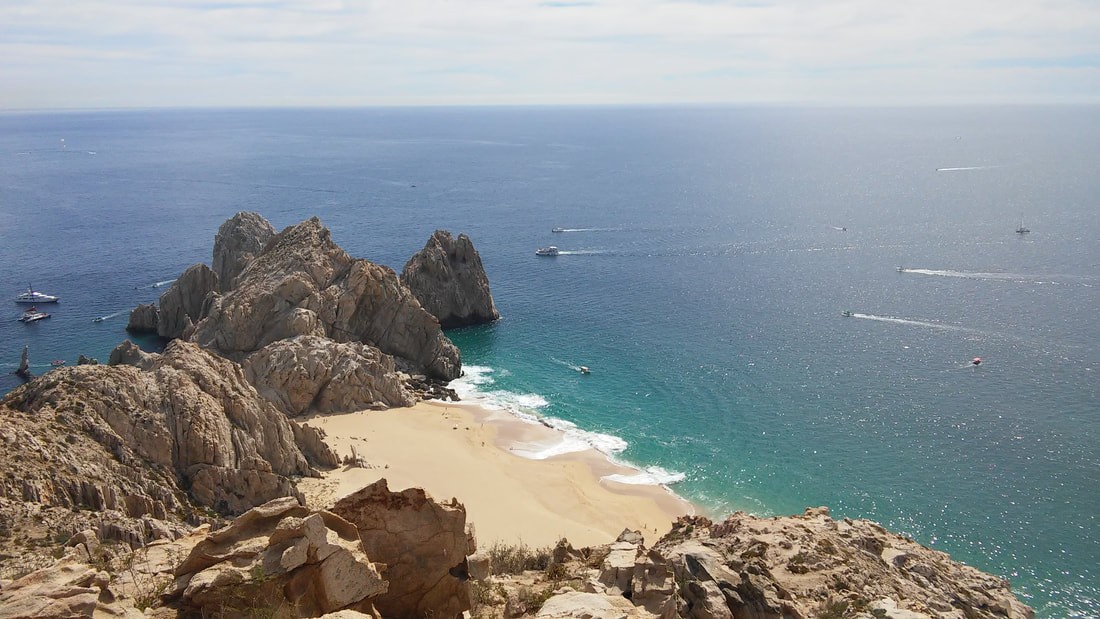
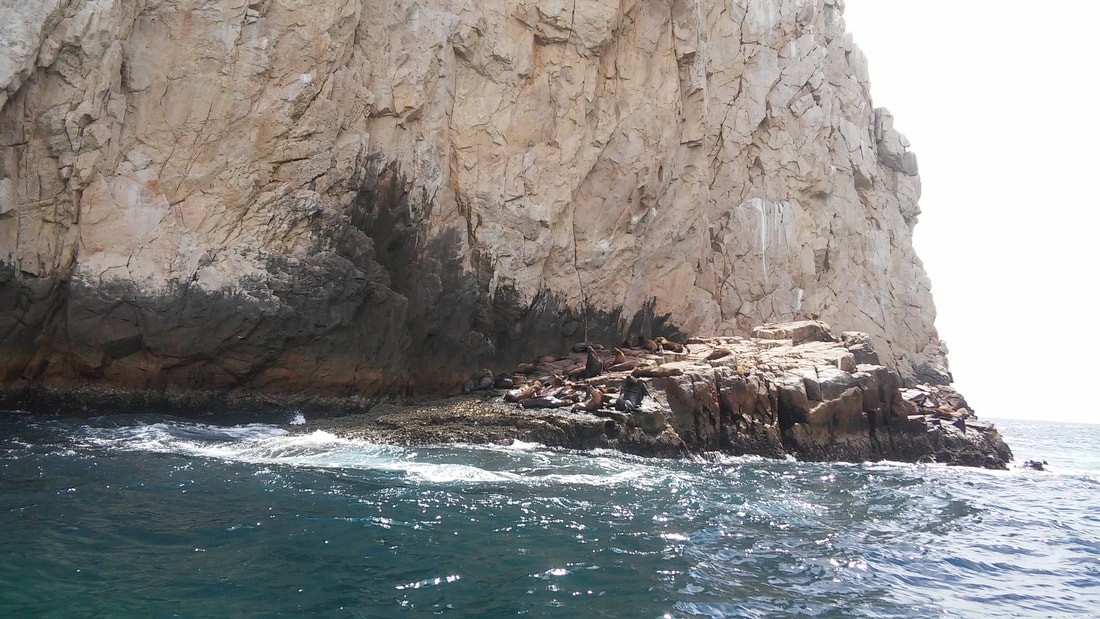
Lover’s Beach sits on the south side of the tip, near land’s end, surrounded by rock formations, with glass-bottom boats coming and going. The best way there is by boat. If you take one to or from the harbor, have them ride past the arch on the way. You can also get there on foot if you are willing to walk a long way along the Pacific, hike through slightly technical terrain, or wade at low tide. I would take the boat.
Divorce Beach faces west at the southwest tip. Once you are at one, you can walk to the other. Solmar Beach, on the west coast, is a long, almost empty stretch of sand with dangerous waves. There is a public entrance among the hotels, and from there you can walk all the way to Divorce Beach. Mostly it belongs to hotel guests.
The beaches have a particular feel: strong currents, cooler-than-tropical water, and high salinity. The standable shallows usually only go out about twenty meters before the slope drops. That setup makes concentrated, rhythmic waves instead of a wash of smaller ones arriving all at once.
A two-meter towel
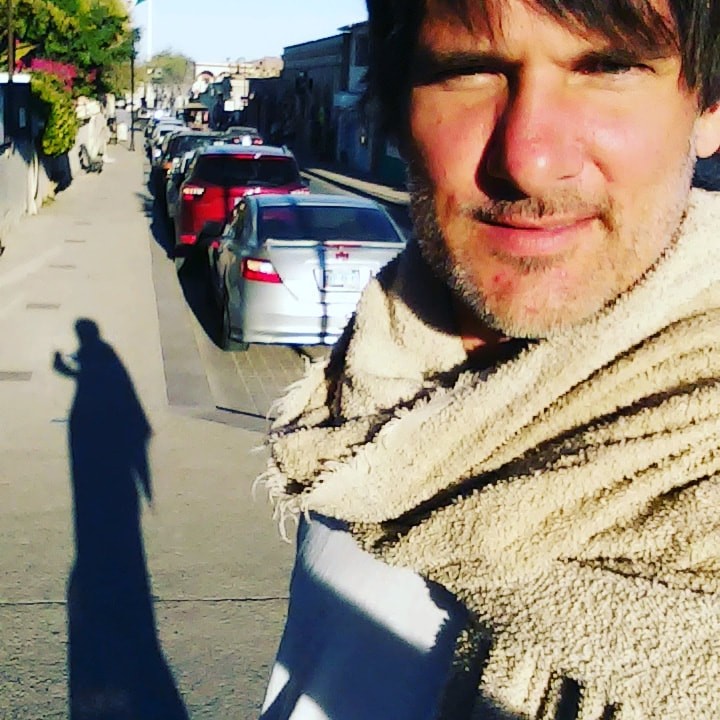
I arrived without a beach towel, figuring I could find one in a souvenir shop. On the first day, that was almost impossible. I went to a fabric store instead and had them cut me two meters of towel material. It was a beach towel, a blanket, and shade for walking the streets in high sun. It also made a decent cape. I looked like a slightly underfunded superhero.
The food
Cabo San Lucas has so many restaurants that you could eat at a different one for every meal and barely make a dent. Prices ran about in line with bigger American cities: deals at local spots, and tourist restaurants far outnumbering them. Lunch often landed around fifteen to twenty dollars, a big dinner closer to thirty. I even paid three dollars for a side of rice at an Indian place.
I had eaten some remarkable meals traveling through interior Mexico. Cabo was a shadow of that quality, at higher prices. By the end of the week I had adjusted to the style: food that looked like fine dining and was a step above mass-produced, if not quite the real thing. The gems were the seafood. The town is surrounded on three sides by water, so the sushi, shellfish, and catch of the day can be excellent. I also stumbled into Taqueria Las Guacamayas in San Lucas, a tourist-friendly mix of traditional Mexican fare that I kept thinking about afterward.

Pirate’s Overlook
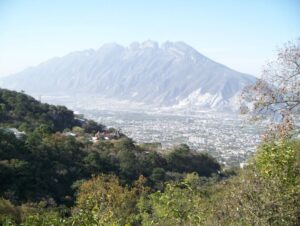
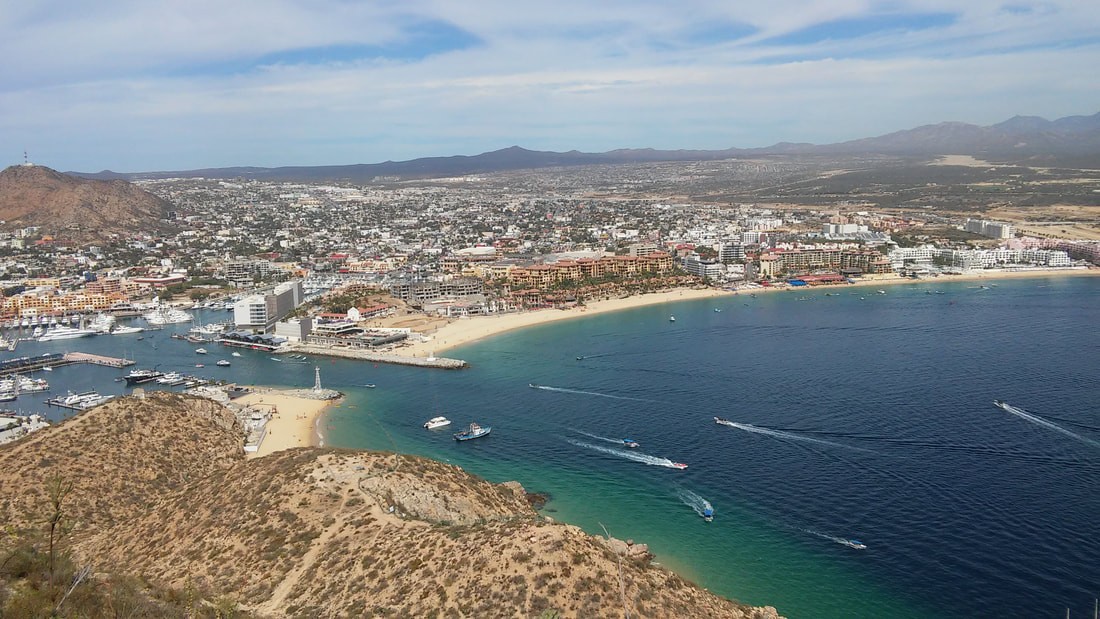
I would hike Mount Solmar, also called Pirate’s Overlook, again in a minute. It sits at the edge of town, and getting there is a little strange at first: the trail starts on private property, behind a fence and a gate with dogs. The owner is welcoming and lets visitors hike to the top.
It is a real mountain hike. I did it in Crocs, and a friend did it in sandals, but hiking shoes would have been smarter, especially for what I did next. I took my life in my hands and went down the back side of the mountain toward Lover’s Beach. That meant some tense, technical scrambling in a ravine along sharp rocks. I would not recommend that route. Going to the top and back down on the town side is straightforward, and the view is worth the climb.
Getting around
The airport is about thirty minutes from San José and forty-five from San Lucas. I spent five nights in San Lucas and the last two in San José, closer to the flight home. A lot of people rent a car. I did not, but I met someone who had one, which made the hop between the two towns easy. Otherwise the bus is simple, and both towns are walkable. I booked a shuttle with TransCabo for the airport, and that was easy too.
Hotels are not cheap. Beachfront runs to several hundred dollars a night, and even the cheapest rooms in town were around sixty. Traveling on my own, I stayed in hostels in both towns. Neither was particularly great or terrible. If you look, decide whether you want a quiet place or a louder one. Cabo San Lucas can be a party city, especially during spring break, which is when I was there.
I came for the water and the rocks, and I left with a two-meter towel and the view from that hill in my head. That was enough.