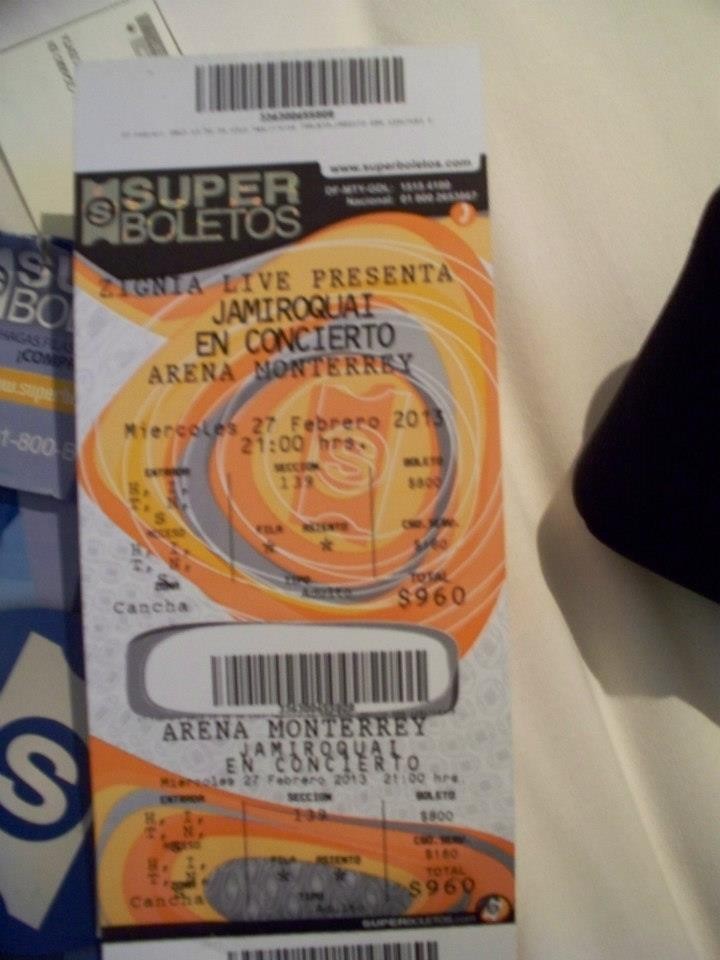
In February 2013, a friend and I went to Monterrey to see Jamiroquai. When I told people I was going, the first thing they said was not “that will be awesome.” It was “be careful.” We decided the trip would go better if we treated it that way, and if we just showed up.
My buddy JB drove us to Laredo and left his car at a Wal-Mart. We took a cab to the bus stations downtown, where the companies sit almost on top of one another and every coach leaves at a slightly different time. We missed a few by five minutes, then found one: a luxury coach with two other passengers, three hours direct to Monterrey, twenty-five dollars each.
At the crossing they gave us the Mexican departure registration we would have to pay, about thirty-five dollars, before we could leave the country. They told us not to lose it. There was one more checkpoint on the road. The agent stepped onto the bus, looked at us, and muttered “Americanos,” grinning. We were obviously no threat to anyone.
Around the city
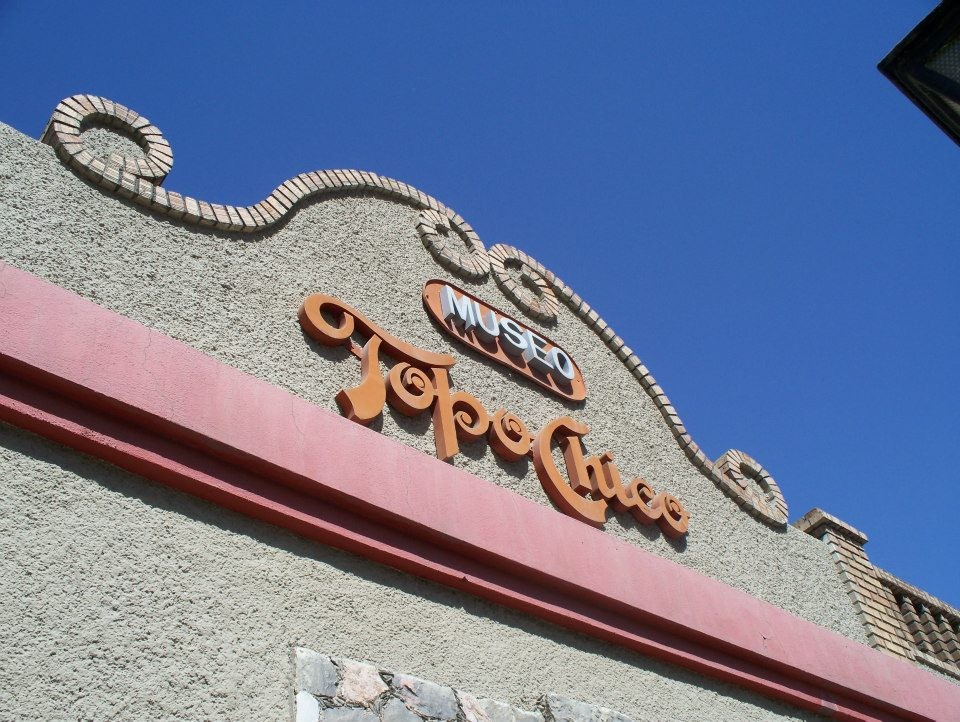
The next morning we talked down the price on a rental car with a rattling fender and bald brakes. We drove to the Topo Chico plant, the source of the sparkling water Austin already loved, hoping to see it from the inside. The factory was closed to the public. JB managed to get us an appointment by saying we were from Austin and had worked with C3, and that we were trying to bring Topo to Austin City Limits. The appointment got us as far as the gate. We never made it inside.
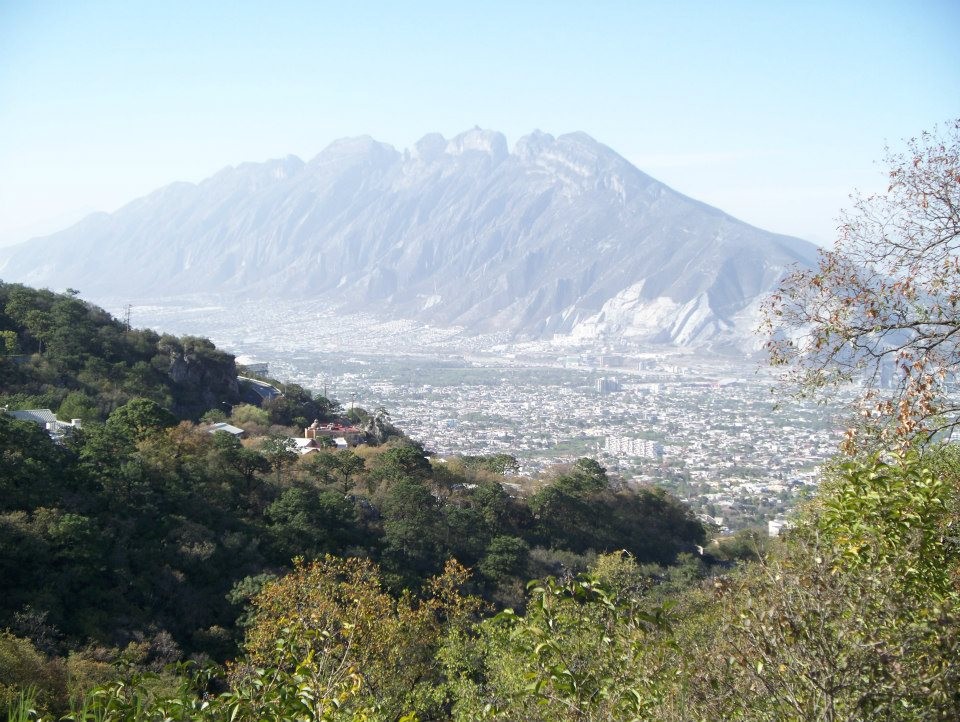
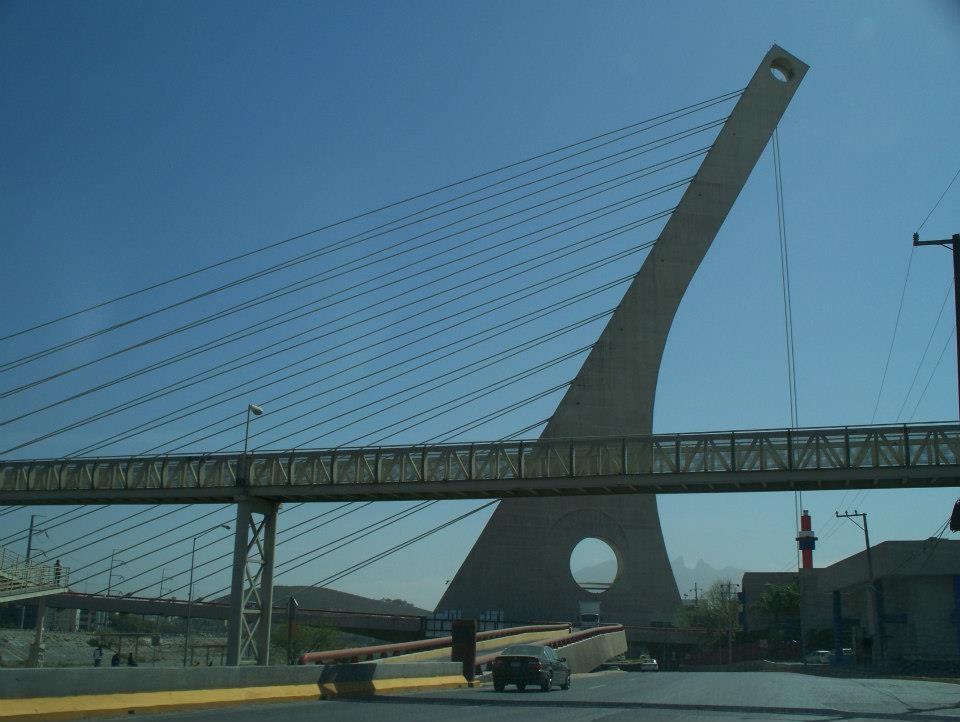
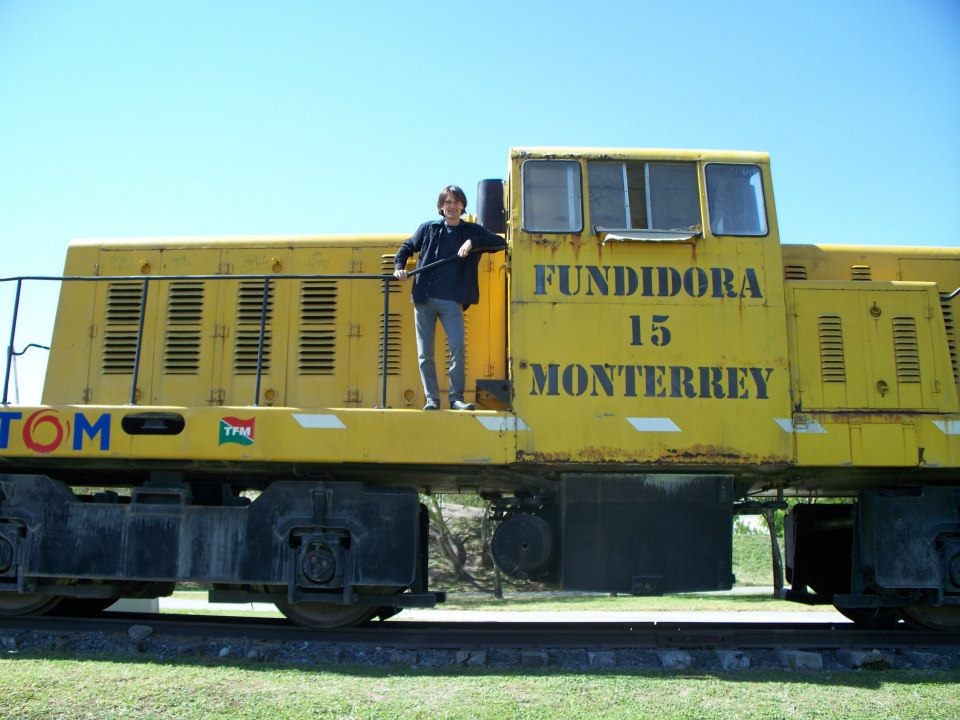
We spent the rest of the day driving: up Parque Ecológico Chipinque, through San Pedro, around a city pressed up against the mountains.
Backstage
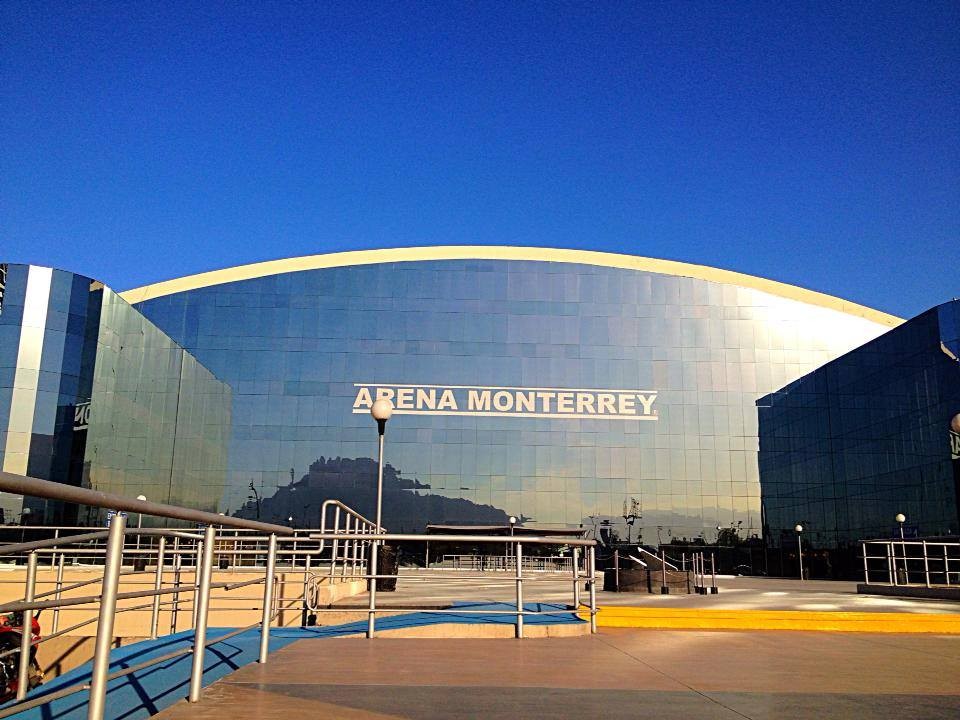
The show was at Arena Monterrey that night. We took a hotel within walking distance and decided to see how close we could get to the band before the doors. We walked through the gate chatting, as if we belonged there. The guard asked where we were going. “Trabajamos con Jamiroquai,” JB said, happily. The guard waved us on.
We followed someone through the steel door at the loading dock and into the backstage area. The band was not there. The local crew was soundchecking. We walked up behind the stage, looked at the gear, and found a hallway of green rooms. Every door was closed except the last one: Jay Kay’s. No Jamiroquai, but I took a picture of his poncho. On the way out, the door guard made a guitar-motion question mark. We were musicians. We said sí.
Two hours later we tried again. A new front guard, the same easy walk in, and then, at the steel doors, Jamiroquai’s tour management stopped us. JB said we were from Austin, wrote for the Austin Daze, and wanted to interview Jay Kay if that was possible. In a gruff London accent we learned that Jay was hit or miss for interviews, and that he usually arrived about ten minutes before the show. The rest of the band was soundchecking. The room was closed, but they could hook us up with tickets. We already had cancha tickets, on the floor. That helped. The tour manager said we could come back at the end of soundcheck.
“I’d love to interview Matt, the keyboard player,” I said. “I play the keys, and I love what he does.”
“Ok, see you at 5:15.”
At 5:15 she asked for our credentials. I had not brought any. JB pulled out his passport. She searched for him and for Austin Daze and got nothing, then looked up our LLC and let us in. She walked us into a green room, and Matthew Johnson stood up from his chair to shake our hands. It was our first interview with anyone in a band that size. We asked if we could record.
Matt preferred Matt, not Matthew: “Everyone but my mum calls me Matt.” Mexico City, the night before, had been “just off the hook,” the best gig he had done with the band in years. No one in the band had been to Monterrey before. They had not started the next record yet, though there were leftover songs from the last one, and he bet one or two would make it. Jay usually arrived with a riff in his head; Matt or Rob, the guitarist, would interpret it, and they would chip in. The lyrics and melodies were Jay’s.
I asked about tribute bands without mentioning that I played keys in one. “It’s kind of weird to watch,” he said. “Obviously it’s very flattering, especially for some of the songs I’ve written. It’s surreal, but good.” His own keyboard heroes were Herbie Hancock of the Headhunters era, and Greg Phillinganes, the L.A. session player. On this tour he was playing a Fender Rhodes, a Nord Wave, a Yamaha Motif, and an Alesis A6.
We did not stay long. On the way out I told JB it had been awesome.
The show
We had dinner, sold an extra pair of tickets at the door, and found a spot about ten rows from the rail. The opening band played to a backing track. Then Jamiroquai, minus Jay Kay, walked on in the dark and teased “Scam,” a dissonant instrumental off the second album, before Jay came out and they went into “Travelling Without Moving,” which was about right for two tourists who had come all this way for one night.
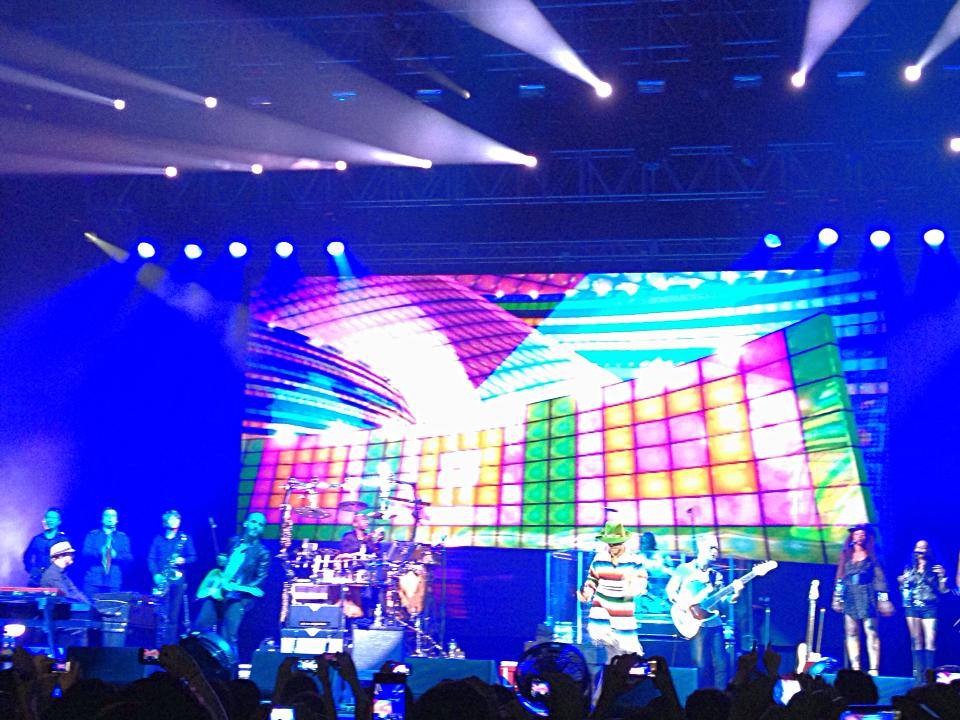
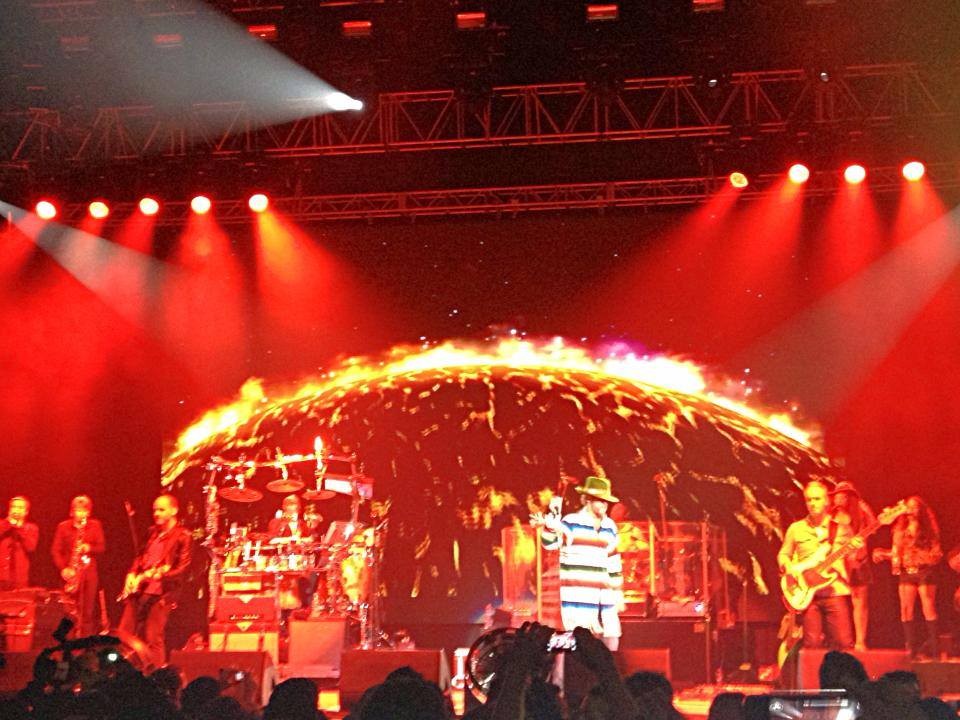
It was the band’s twentieth anniversary. Every member had been replaced over those years except Jay Kay. Paul Turner had been on bass since 2005; Matt on keys since 2002; Rob Harris on guitar since 2000. From where we stood I could not hear enough of the keys. I later watched videos from the balcony, where they sounded better, and blamed our place on the floor.
They did not play the same set they had been repeating on the tour. The staples were there: “Alright,” “Little L,” “Space Cowboy,” “Main Vein,” “Cosmic Girl,” “Canned Heat,” and “Revolution 1993.” Jay was more laid back than in the old footage I knew, still in the songs, fewer acrobatics, his speaking voice a notch lower. It was still a strong, packed show. Coming to Mexico was worth it.
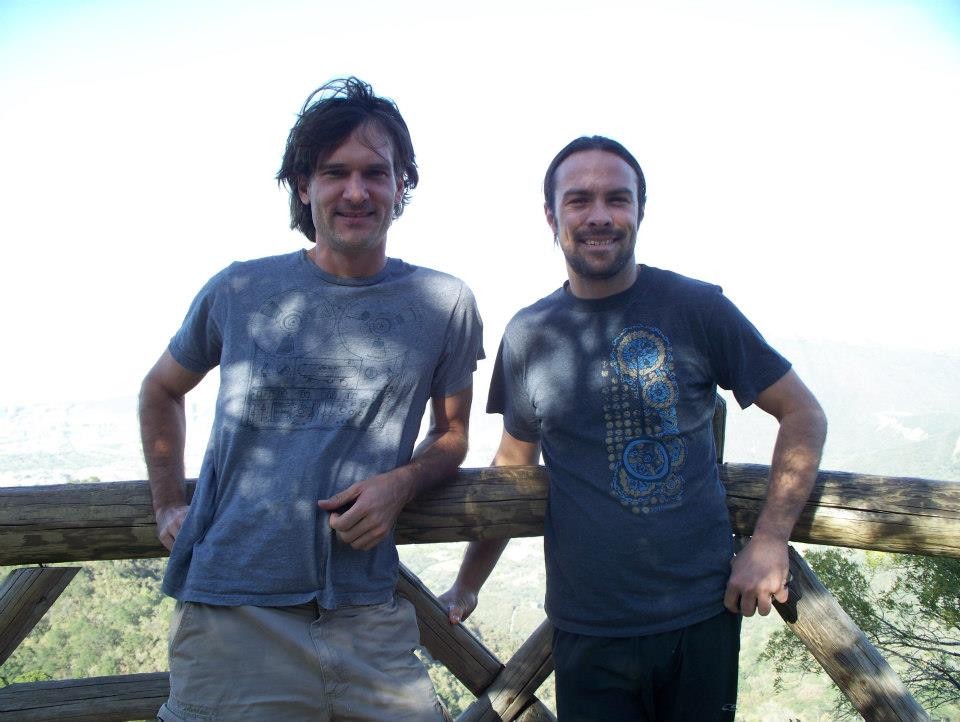
After the show I bought a couple of unofficial T-shirts and we ate hot dogs from a cart that might have been the best meal of the trip. The next morning we tried two banks to pay the departure registration. Both looked at us as if we were in the wrong place. Somewhere in that shuffle JB lost his visa, which caused a short, mild stretch of concern. The next bus all the way to Laredo was a long wait, so we took one to Nuevo Laredo, a taxi to the walk-up line at the border, and a cab back to the Wal-Mart. Then we drove to Austin.
I published the story that May in the Austin Daze. The interview recording is still up, if you want to hear Matt in his own voice.